Samsung is not only the world's top smartphone vendor, but also the number one chipmaker and the largest television manufacturer out there. Despite all these incredible accomplishments and supremacy over several branches of the tech industry, the company seems to be going through somewhat of a rough patch.
While we're obviously not talking about the kind of trouble LG or Sony's mobile divisions have been facing for a number of years now, it's certainly worrying when quarterly profits go down 60 percent over the course of 12 months. Samsung's full Q1 2019 financial results are not in yet, but if today's earnings guidance pans out (which usually appears to be the case), consolidated sales for this January - March timeframe will circle 52 trillion Korean won, with operating profit sitting at around 6.2 trillion won.
Those figures roughly equate to $45.7 billion and $5.5 billion respectively today, comparing rather unfavorably to over 60 trillion won in revenue and nearly 16 trillion won in profits reported this time last year for 2018's first calendar quarter. The estimated Q1 2019 sales and profit scores are also down 12 and 42 percent respectively from Q4 2018, which was hardly considered a good quarter for Samsung.
Until the tech giant releases the final, detailed numbers for 2019's first 90 days later this month, breaking down the results by individual business, we can make several educated guesses as to what went "wrong" this past quarter. For starters, the company's global smartphone shipments have been declining for a few quarters, and the Galaxy S10 family was probably released a little too late to reverse that trend. Or perhaps the newest flagships are not significantly more popular than their predecessors after all.
Meanwhile, it's important to point out that Samsung's semiconductor business proved by far the most profitable among the company's different branches lately, losing quite a bit of steam as demand for memory chips continues to drop. Samsung basically sells its chips to every major smartphone vendor today, so the market slowdown has impacted the company in a number of ways. Last but not least, weak iPhone sales probably took a toll on Samsung's financials from an OLED display supply standpoint as well. Of course, at the end of the day quarter, the Korea-based tech giant still earned $5.5 billion, which is certainly nothing to sneeze at.
Tesla chief Elon Musk told reporters outside the Manhattan Federal Courthouse that he was "very happy" over the outcome of the SEC's latest complaint against him. The commission sought to hold him in contempt for violating their previous settlement over a financially relevant tweet, after all, but the judge has merely ordered both parties to resolve their dispute outside of court. "Take a deep breath, put your reasonableness pants on, and work this out," District Judge Alison Nathan said during the hearing.
The SEC brought him to court for the second time after he tweeted a photo of Tesla's facility and followed that up by saying that the automaker will manufacture 500,000 cars in 2019. He corrected himself in another follow-up and clarified that 500,000 is merely the expected production rate. Tesla still expects to deliver 400,000 vehicles for the year, which is consistent with previous guidance. Clearly, his clarification wasn't enough for the SEC.
Tesla made 0 cars in 2011, but will make around 500k in 2019
Musk had to step down as Tesla chairman and pay $20 million in penalty the first time the Securities and Exchange Commission filed a lawsuit against him over tweets about taking Tesla private. The agency said his proclamation that the company already has the funding to take the automaker private constitutes fraud for being "false and misleading."
While that lawsuit also sought to ban the executive from serving as an officer of a public company, Musk's deal with the SEC ultimately allowed him to keep his role as Tesla's CEO. Also part of that deal? Having tweets that contain material information about Tesla's vehicle production pre-approved by one of the company's lawyers.
The commission said that by tweeting the 500,000 production outlook for the year, Musk shared "inaccurate and material" data, one that wasn't reviewed by Tesla's lawyers. Musk argued, however, that he had the right to decide whether a post needs pre-approval and that the tweet in question was immaterial to shareholders. He said in a statement provided to Reuters:
"I have great respect for Judge Nathan, and I'm pleased with her decision today. The tweet in question was true, immaterial to shareholders, and in no way a violation of my agreement."
Judge Nathan gave both parties two weeks to hammer out an agreement. If they still don't reach one by that time, then that's when she'll hand down her decision. In case Musk is found in contempt, he might be required to start submitting regular reports about how Tesla's lawyers are overseeing his tweets. SEC lawyer Cheryl Crumpton is also eyeing the possibility of imposing higher fines, seeing as Musk said the $20 million fine he had to pay the first time was "worth it."
Tesla chief Elon Musk told reporters outside the Manhattan Federal Courthouse that he was "very happy" over the outcome of the SEC's latest complaint against him. The commission sought to hold him in contempt for violating their previous settlement over a financially relevant tweet, after all, but the judge has merely ordered both parties to resolve their dispute outside of court. "Take a deep breath, put your reasonableness pants on, and work this out," District Judge Alison Nathan said during the hearing.
The SEC brought him to court for the second time after he tweeted a photo of Tesla's facility and followed that up by saying that the automaker will manufacture 500,000 cars in 2019. He corrected himself in another follow-up and clarified that 500,000 is merely the expected production rate. Tesla still expects to deliver 400,000 vehicles for the year, which is consistent with previous guidance. Clearly, his clarification wasn't enough for the SEC.
Tesla made 0 cars in 2011, but will make around 500k in 2019
Musk had to step down as Tesla chairman and pay $20 million in penalty the first time the Securities and Exchange Commission filed a lawsuit against him over tweets about taking Tesla private. The agency said his proclamation that the company already has the funding to take the automaker private constitutes fraud for being "false and misleading."
While that lawsuit also sought to ban the executive from serving as an officer of a public company, Musk's deal with the SEC ultimately allowed him to keep his role as Tesla's CEO. Also part of that deal? Having tweets that contain material information about Tesla's vehicle production pre-approved by one of the company's lawyers.
The commission said that by tweeting the 500,000 production outlook for the year, Musk shared "inaccurate and material" data, one that wasn't reviewed by Tesla's lawyers. Musk argued, however, that he had the right to decide whether a post needs pre-approval and that the tweet in question was immaterial to shareholders. He said in a statement provided to Reuters:
"I have great respect for Judge Nathan, and I'm pleased with her decision today. The tweet in question was true, immaterial to shareholders, and in no way a violation of my agreement."
Judge Nathan gave both parties two weeks to hammer out an agreement. If they still don't reach one by that time, then that's when she'll hand down her decision. In case Musk is found in contempt, he might be required to start submitting regular reports about how Tesla's lawyers are overseeing his tweets. SEC lawyer Cheryl Crumpton is also eyeing the possibility of imposing higher fines, seeing as Musk said the $20 million fine he had to pay the first time was "worth it."
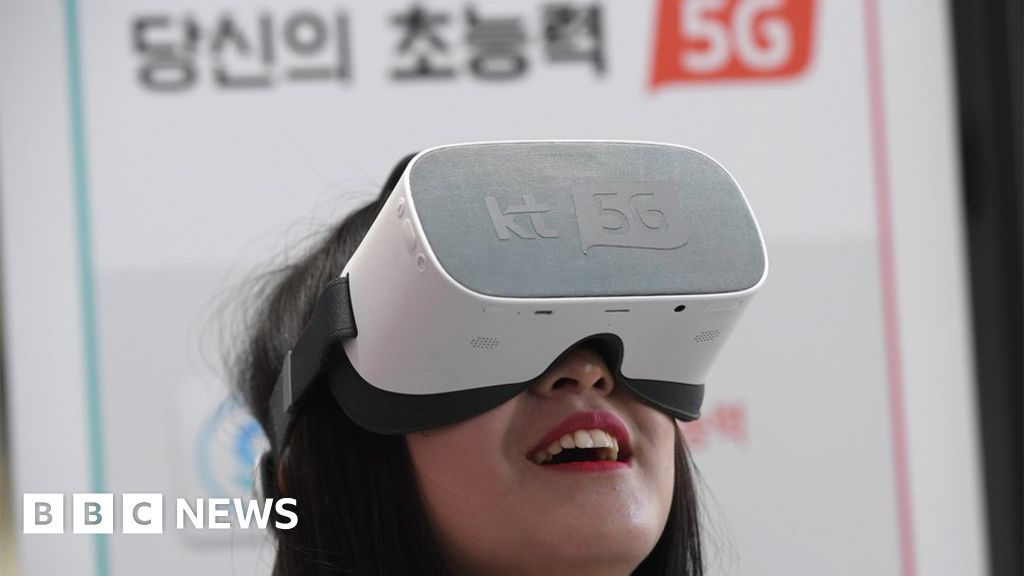
South Korea and the US have this week launched the world's first commercial 5G services, promising a new wave of capabilities for smartphone users.
Samsung said its Galaxy S10 5G device will offer speeds up to 20 times faster than current phones as it began selling the handsets on Friday.
Countries are racing to build 5G networks that will be crucial for future tech such as driverless cars.
Nations are also working to resolve security concerns tied to the networks.
What is 5G?
5G is the fifth-generation of mobile internet connectivity. Users will get more data faster, with less delay. It also promises wider coverage and more stable connections.
Ed Barton, chief television and entertainment analyst at Ovum, said the shift from today's 4G networks to 5G will be significant.
He said first-generation or 1G networks enabled voice, 2G brought text, 3G static images or photos, and 4G enabled video.
"We're expecting the leap from 4G to 5G to be a much greater leap than ever before."
Part of the "leap" will come from the ability to move much greater volumes of data across networks. 5G will mean more devices can be connected to the network at better speeds.
Initially, 5G will bring higher-quality streaming and the ability to livestream to bigger audiences - a better experience for people watching live sports or cloud gaming.
Ovum's Mr Barton said down the track it will enable more augmented reality capabilities, such as better mapping apps and shopping experiences. 5G will be crucial for driverless cars.
The scope of possibilities is vast, from remote surgery to holographic video calls. Mr Barton said we don't yet know what the "killer apps and use cases will be".
"It's a bit like no one predicted that ubiquitous smartphones with payments and location awareness would give rise to Uber," he said.
DJ Koh, president of IT & mobile communications at Samsung Electronics said it has begun "a new era where the incredible speed and connectivity of 5G becomes a reality".
Frost & Sullivan telecoms analyst Quah Mei Lee says South Korea and Japan have been leaders in 5G development. She said South Korea has always been strong in consumer applications but there's "more than it can do" in 5G.
"We will see more applications coming to the market over the next three-to-six months."
What about security concerns?
Much discussion about 5G infrastructure has centred around possible security risks, namely the participation of China's Huawei.
Huawei, the world's largest maker of telecoms equipment, has faced resistance from foreign governments over the risk that its technology could be used for espionage.
In principle, controlling the technology that sits at the heart of vital communications networks gives an operator like Huawei the capacity to conduct espionage or disrupt communications.
This becomes a bigger problem as more things - from autonomous vehicles to domestic appliances - become connected to the internet.
Additionally, IDC's Mr Batra said one of the fundamental differences between 4G and 5G networks is the ability for remote control which raises "potential security concerns".
Mr Batra said with 4G, software and hardware were very tightly coupled. In 5G networks, hardware is separated from the software.
"That allows for remote control... of the network assets. All of these things can be managed virtually, and that makes it challenging in terms of security."
Still, he said authorities around the world are working with operators to address these concerns and "we haven't really seen any hard proof in terms of what is the issue".
The day after the release of Tesla’s Q1 vehicle delivery and production report, CEO Elon Musk headed to a Manhattan courthouse to face the charges leveled against him by the Security and Exchange Commission (SEC). The SEC accused Musk of violating the terms of his settlement with the agency when the CEO tweeted on February 19 that Tesla will produce around 500k vehicles in 2019, echoing one of his statements from the Q4 2018 earnings call.
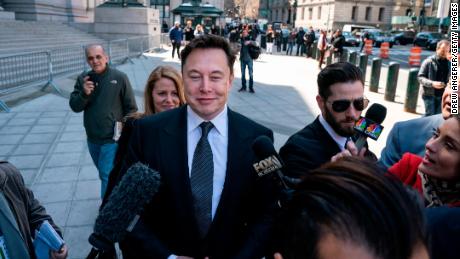
Musk arrived in the courthouse on Thursday in light spirits. Smiling to cameras, the Tesla CEO told reporters that he respects the American justice system. “I have great respect for the justice system and I think the judges in the American system are outstanding,” Musk said. When prompted by veteran CNBC reporter Phil LeBeau if he feels the same way about the SEC, Musk laughed and walked forward.
The SEC’s arguments
The courtroom was packed as Elon Musk and the SEC’s legal team faced off before U.S. District Judge Alison Nathan. Each side is given 45 minutes to express their arguments. The agency went first, represented by SEC attorney Cheryl Crumpton, who immediately claimed that Musk “recklessly tweeted out information that has no basis in fact (credit to Matt Robinson of Bloomberg, who is currently conducting a Live Blog of the hearing).”
Explaining further, Crumpton stated that the requirement that Musk get pre-approval for his tweets was “the heart of the relief” that the government had sought as part of its settlement. The SEC lawyer also noted it has become pretty clear “over the course of the last few weeks” that Musk does not intend to comply with last year’s settlement terms. Crumpton added that the agreement does not require every single tweet to be pre-approved, provided that the information in the posts was immaterial. “The communication we are talking about here is very, very different,” she said.
The SEC lawyer also pointed the blame to Tesla, who allegedly is failing to control the conduct of its CEO. “Tesla’s conduct is also troublingto the SEC. This court ordered Tesla to implement a mandatory pre-approval process, but they are apparently fine with Mr. Musk making up his own procedure. Tesla still seems unwilling to exercise any meaningful control over the conduct of its CEO,” Crumpton replied.
Judge Nathan, for her part, asked the SEC lawyer if Musk would need to get approval for tweets that reiterated information that had already been disclosed. The judge went through different hypotheticals with the SEC lawyer, such as repeating earlier guidance. “We’re not saying always yes or always no to that. It depends is the answer,” Crumpton said.
“This is a material statement no matter how you cut it, and it was a violation to not get it pre-approved,” Crumpton added.
For his alleged violations of his settlement, the SEC lawyer called on the court to give Musk a series of escalating fines if he continues to violate the order. Crumpton also stated that the SEC wants the court to order Musk to report monthly on his compliance with the settlement. “We want the court to tell them that this has to observed in the way that it’s written,” the SEC lawyer said.
Response from Tesla’s legal team
With the SEC having completed its argument, it was time for Elon Musk’s legal team to argue their points. Tesla lawyer John Hueston stated that “it’s very clear that Mr. Musk retained discretion in the policy. The policy makes clear that the tweet is subject to a fact-based determination by Mr. Musk.” The Tesla lawyer also stated that Musk’s decision to decide what’s material information was negotiated. “That’s exactly what Tesla negotiated for and got,” Hueston said.
The Tesla lawyer also argued that the SEC is currently pretending to be shocked that Musk gets to decide what is material information and what is not, but that is exactly what the the order says. “They agreed to take out language saying that everything has to be approved. There has to be an oversight process and there is an oversight process. They’re not happy about that today,” he said.
Musk’s legal team stated there is not a clear enough standard to use the harsh recourse of contempt. Instead, Hueston stated that the SEC should have attempted to work things out with Elon Musk and Tesla before bringing the matter to court. “What the SEC should have done was approach in good faith and try to work things out,” the Tesla lawyer said. In response, Judge Nathan noted that her intent is “not only to invite it but to order it.” The judge also added that she will tell the parties to create a new agreement that incorporates the SEC’s concerns.
Addressing Musk’ counsel, Judge Nathan inquired about a scenario in which the CEO will be violating the terms of his settlement with the SEC. When the Tesla lawyer noted that he couldn’t think of one, the judge replied “You’re not very imaginative.”
Continuing his points, Hueston noted that the 15 post-order tweets that were cited by SEC as proof of Musk’s violation of his settlement shows that the agency believes “that, apparently, contempt can fall on him for things that he’s tweeting” even if the information had already been disclosed. “They have not shown that the proof of non-compliance is clear and convincing. This is not someone who’s wantonly saying he doesn’t care about processes and procedures. That’s someone who is trying his best to comply and has been diligent,” the Tesla lawyer said (credit to Bloomberg‘s Chris Dolmetsch for the update).
The SEC’s Rebuttal
The SEC lawyer returned stating that the agency did not rush into its request to have Musk held in contempt at all. “Its not that we rushed into court on the first opportunity. There have been a number of tweets over time.” Crumpton further added that the SEC assumed Musk will comply with the terms of his settlement despite his statements in 60 Minutes, where he explicitly commented that he does not respect the SEC.
Hearing Adjourned
Following the SEC’s rebuttal, Judge Nathan asserted that compliance with court orders is not optional, nor is it a game, regardless of whether you are a “small potato or a big fish.” She also noted that government lawyers must take all steps necessary to reach a resolution before invoking contempt, before adding that she has “serious concerns that whatever I decide here the issue will not be finally resolved.”
Judge Nathan ordered the two parties to arrange a meeting and send a letter to the court within two weeks. The parties will be required to indicate if they have reached an agreement or not. If no agreement is reached then, Elon Musk’s legal team and the SEC will hear from her in due course.
The hearing was adjourned after. In a statement following the hearing, Musk stated that he was “very impressed with Judge Nathan’s analysis.”
Tesla’s Elon Musk faces the SEC in hearing over contempt charges (Updates)
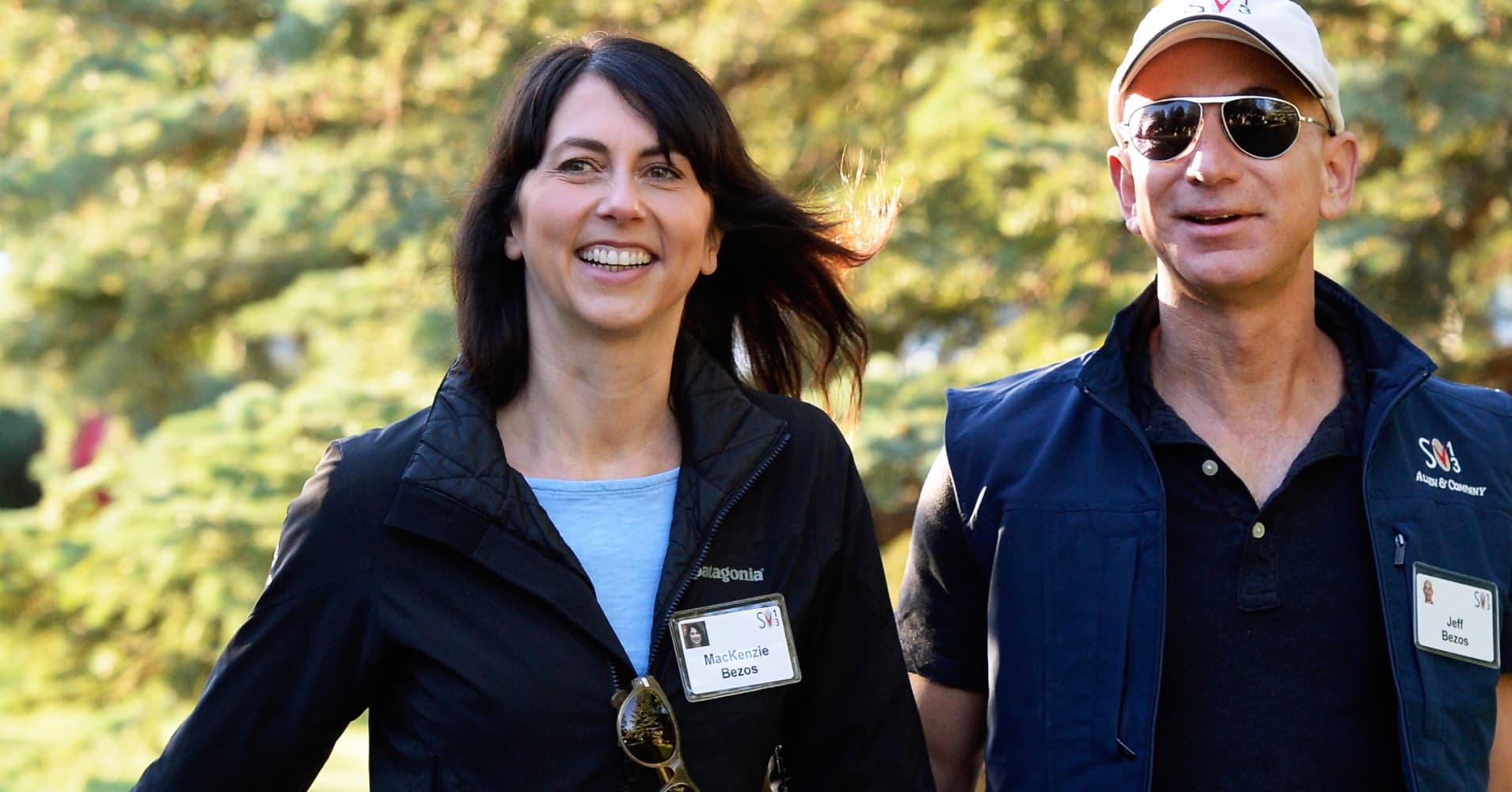
MacKenzie Bezos announced on Twitter on Thursday that she and Jeff Bezos have completed the process of dissolving their marriage, leaving her with $35.6 billion in Amazon stock.
MacKenzie Bezos said she was "happy" to be giving her ex-husband 75 percent of their stock in Amazon along with voting control of her shares. She also relinquished to him all of her interests in The Washington Post and the Blue Origin aerospace company.
The settlement would make her the fourth-richest woman in the world. She ranks behind Francoise Bettencourt Meyers, Alice Walton and Jacqueline Mars, according to Bloomberg.
According to a filing with the Securities and Exchange Commission, MacKenzie Bezos will retain shares representing about 4 percent of Amazon's outstanding common stock, making her the third-biggest shareholder at the company, behind her ex-husband and Vanguard. He remains the richest person in the world, even after losing $35.6 billion in Amazon stock.
Amazon's stock was down about 0.4% Thursday afternoon following the news.
In a separate statement, Jeff Bezos shared his gratitude to his ex-wife.
"I'm grateful for her support and for her kindness in this process and am very much looking forward to our new relationship as friends and co-parents," Bezos said.
The announcement clears up some concerns investors had in the days after the couple announced their plans to get a divorce about who would have voting power at Amazon. The Bezoses' split represented a unique situation, according to divorce law experts, since the two were together before Amazon started and before either of them owned such a vast amount of money.
While other founders and CEOs have gotten divorces, most had met their spouses after acquiring their wealth. MacKenzie Bezos, on the other hand, reportedly played a significant role laying Amazon's roots. In an oft-cited origin story, MacKenzie drove the pair from New York to Seattle while Jeff wrote Amazon's business plan. MacKenzie eventually negotiated Amazon's first freight contracts, according to Wired.
The SEC accuses Musk of violating a settlement deal reached last year that required he get pre-approval for social media posts about the electric car company.
Musk's appearance at the Manhattan court surprised onlookers. Judge Alison Nathan is tasked with weighing the SEC's request to hold Musk in contempt. It is unclear when Nathan will issue a ruling.
If she sides with regulators, Musk could face another hefty fine and further limits to his social media use. The judge could oust Musk from the CEO seat, although she is not expected to rule that harshly. Nathan could also toss out the settlement with the SEC, effectively reopening the agency's litigation against Musk and Tesla.
The SEC claims Musk violated its 2018 settlement deal when he said in a February 19 tweet that Tesla will make around 500,000 cars in 2019. Hours later, he posted another tweet that said the company will actually deliver 400,000 cars this year.
Although Musk corrected the mistake, regulators said he had "once again published inaccurate and material information about Tesla to his over 24 million Twitter followers," according to court papers. Musk has denied wrongdoing and accused the SEC of trying to stifle free speech.
Tesla had agreed to establish a board committee to oversee Musk's posts. In a court filing, Tesla conceded Musk did not receive pre-approval from anyone on that committee for his February posts, but the company has since claimed that he didn't need it.
Musk's standoff with the SEC started last year when he claimed in a tweet that he was "considering" taking Tesla private at $420 a share and that he had secured funding for the deal. That sent Tesla's stock surging.
But the SEC later said funding was not, in fact, secured, and the agency accused him in a lawsuit of misleading investors. Musk initially signaled that he would fight the agency, but weeks later regulators announced that he and Tesla had agreed to settlement deals that saddled them with $40 million in fines and required Musk to step down as the company's chairman. He retained the role of CEO.
Since that deal was reached in October, Musk has openly mocked the SEC, suggested its oversight is "broken" and said he does "not respect " the agency.
Musk also said in a December interview with "60 Minutes" that he would not allow all of his tweets to be proofread, though he insisted that he planned to comply with the settlement terms out of "respect" for the "justice system."
After he posted the erroneous tweet in February, the SEC hit back by filing a new suit asking a federal judge to hold him in contempt. The agency claimed Musk had not "made a diligent or good faith effort" to comply with the settlement and pointed to his "60 Minutes" interview as evidence he was not taking the terms seriously.
The escalating situation, and other erratic behavior by Musk, left many investors wondering what it would mean for Tesla if its famous CEO was ousted from the company. A Barclays analyst suggested Tesla's stock has a $130 "Musk premium," which could disappear if he leaves.
Elliot Lutzker, a securities attorney at Davidoff Hutcher & Citron LLP and a former SEC prosecutor, said on Thursday he thinks the court will consider Tesla's wellbeing in deciding if or how to punish Musk.
"The court does not want to hurt Tesla shareholders," Lutzker told CNN Business in an email on Thursday. "I do not believe the court will hold him in contempt. Rather it will in all likelihood impose more substantial fines."