Kamis, 11 April 2019

What's moving markets today: Live updates - CNN

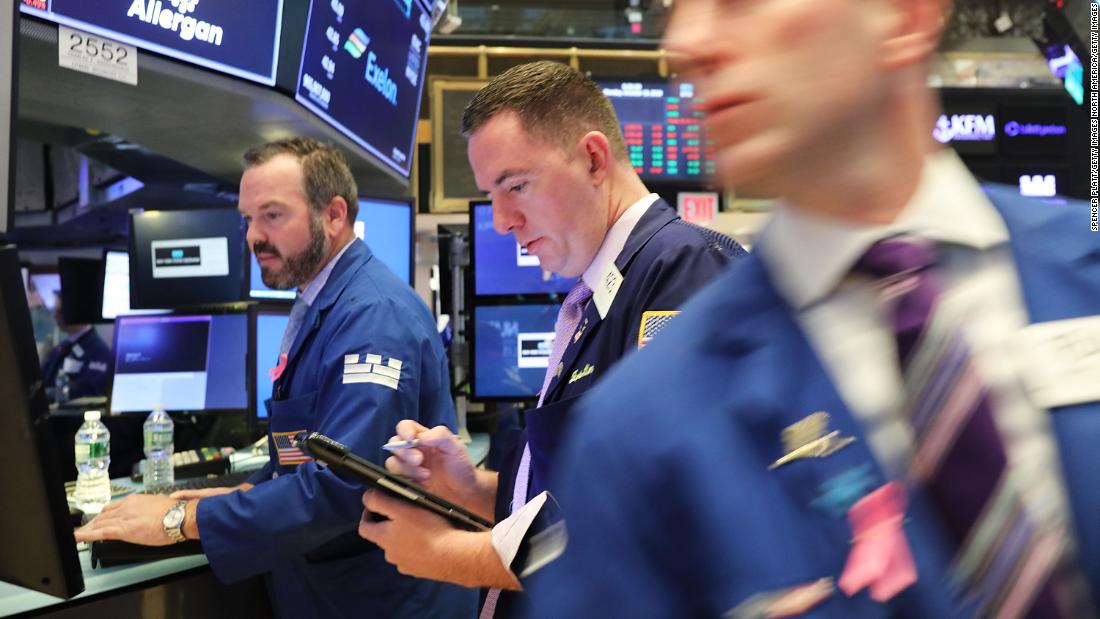
US jobless claims dropped to their lowest level since October 1969 last week, the Labor Department reported. Only 196,000 people filed for unemployment benefits in the week ended April 6. The four-week average was 207,000.

The data stressed the strength of the US labor market in the face of worries about economic slowdown.

US stock futures were mostly unchanged Thursday, pointing at a flat to slightly higher open. The dollar, measured by the ICE US Dollar Index, was up 0.2% at 97.108.

In other economic data, the producer price index for March rose 0.6% on the month and 2.2% year-over-year, beating expectations. 

Let's block ads! (Why?)


https://www.cnn.com/business/live-news/stock-market-news-today-041119/index.html

2019-04-11 14:05:00Z
52780264816147

What's moving markets today: Live updates - CNN

US jobless claims dropped to their lowest level since October 1969 last week, the Labor Department reported. Only 196,000 people filed for unemployment benefits in the week ended April 6. The four-week average was 207,000.

The data stressed the strength of the US labor market in the face of worries about economic slowdown.

US stock futures were mostly unchanged Thursday, pointing at a flat to slightly higher open. The dollar, measured by the ICE US Dollar Index, was up 0.2% at 97.108.

In other economic data, the producer price index for March rose 0.6% on the month and 2.2% year-over-year, beating expectations. 

Let's block ads! (Why?)


https://www.cnn.com/business/live-news/stock-market-news-today-041119/index.html

2019-04-11 13:55:00Z
52780264816147

Gold Prices Under Pressure As Producer Inflation Rises 0.6% In March - Kitco News

(Kitco News) - The gold market remains under pressure, but continues to hold on to support around $1,300 an ounce even as whole sale inflation pressures rose sharply last month.

Thursday, the U.S. Labor Department said its Producer Price Index (PPI) rose 0.6% in March, following February’s increase 0.1% ; the data was significantly stronger than expected with economists’ forecasting an increase of 0.3%.

This is the first time in four months that producer inflation beat expectations.

At the same time core PPI, which strips out volatile food and energy costs, increased 0.3% last month, following February’s increase of 0.1%. Economists were expecting to see wholesale inflation rise 0.2%.

However, the gold market is not seeing much reaction to the higher inflation data. June gold futures last traded at $1,301.40 an ounce down 0.94% on the day.

Economists pay close attention to producer prices as it is a leading indicator for consumer prices. Tradionally, companies pass on higher costs to their customers. Economists note that strong PPI data raises the downside risk to consumer inflation pressures.

According to some analysts, gold is not seeing much reaction to the inflation data because most of the increase was due to volatile energy prices. The gasoline index increased 16% last month, according to the report.

For the year, headline inflation rose 2.2%, up from 1.9% reported in February; however, core inflation for the year was 2%, down from February’s reading of 2.3%. According to reports, this is the lowest annual inflation reading since August 2017.

Let's block ads! (Why?)


https://www.kitco.com/news/2019-04-11/Gold-Prices-Under-Pressure-As-Producer-Inflation-Rises-0-6-In-March.html

2019-04-11 12:36:00Z
52780265691550

US producer prices post the biggest increase in 5 months - CNBC

U.S. producer prices increased by the most in five months in March, but underlying wholesale inflation was tame.

The Labor Department said on Thursday its producer price index for final demand rose 0.6 percent last month, lifted by a surge in the cost of gasoline. That was the largest increase since last October and followed a 0.1 percent gain in February.

In the 12 months through March, the PPI rose 2.2 percent after advancing 1.9 percent in February. Economists polled by Reuters had forecast the PPI would climb 0.3 percent in March and increase 1.9 percent on a year-on-year basis.

A key gauge of underlying producer price pressures that excludes food, energy and trade services was unchanged last month after ticking up 0.1 percent in February. The so-called core PPI increased 2.0 percent in the 12 months through March. That was the smallest annual increase since August 2017 and followed a 2.3 percent rise in February..

Data on Wednesday showed consumer prices rose by the most in 14 months in March, driven by more expensive gasoline. But core inflation remained muted amid a plunge in the cost of apparel.

Slowing domestic and global growth are keeping inflation contained. Wage inflation has also been moderate despite a tight labor market.

Minutes of the Federal Reserve's March 19-20 policy meeting published on Wednesday described inflation as "muted," though officials expected it to rise to or near the U.S. central bank's 2 percent target. The Fed's preferred inflation measure, the core personal consumption expenditures (PCE) price index, is currently at 1.8 percent.

Last month, wholesale energy prices jumped 5.6 percent, with gasoline prices shooting up 16.0 percent, the most since August 2009. Energy prices rose 1.8 percent in February.

Gasoline accounted for over 60 percent of the 1.0 percent rise in goods prices last month. Goods prices increased 0.4 percent in February.

Wholesale food prices rose 0.3 percent in March, reversing a 0.3 percent drop in the prior month. Core goods prices rose 0.2 percent after edging up 0.1 percent in February.

The cost of services increased 0.3 percent in March after being unchanged in the prior month. Prices for healthcare services fell 0.2 percent last month. There was a sharp drop in the cost of hospital outpatient services. Those healthcare costs feed into the core PCE price index.

Let's block ads! (Why?)


https://www.cnbc.com/2019/04/11/producer-price-index-march-2019.html

2019-04-11 12:31:08Z
52780265691550

Jeff Bezos challenges retail rivals to outdo Amazon’s $15 minimum wage - The Verge

In his annual letter to shareholders, Amazon CEO and founder Jeff Bezos throws in a message to his company’s retail competitors, urging them to start a price war on the minimum wage they pay their employees. Amazon moved to a $15 minimum wage in the United States at the end of last year — though it did so with cuts to benefits and stock grants that meant some employees would end up being paid less, which then led Amazon to announce a further boost in pay to rectify the situation. Still, in a country with a federal minimum hourly pay of $7.25, Amazon’s actions can be considered progressive.

“Today I challenge our top retail competitors (you know who you are!) to match our employee benefits and our $15 minimum wage,” Bezos writes. “Do it! Better yet, go to $16 and throw the gauntlet back at us. It’s a kind of competition that will benefit everyone.”

In June of this year, Target plans to bump its minimum hourly wage to $13 per hour (from the current $12 per hour), ahead of a move to $15 per hour by the end of 2020. Walmart’s minimum wage is $11 per hour. Costco, citing a boost in sales, announced a move to $15 per hour in March. All of these moves are driven, in larger or smaller part, by a highly competitive jobs market, with US unemployment currently measured at 3.8 percent.

With workers harder to find and keep, all retailers are having to spend more on staff, and Walmart is especially sensitive to that, given its massive overhead related to retail locations, and that it employs more than 1.5 million people in the US and more than 2.2 million worldwide. Amazon’s wage increase last year, by contrast, benefited 350,000 employees. The difference in workforce size and overhead costs is part of the reason why Amazon can be more aggressive with its pay increases.

The genius of Bezos’ challenge today is that he wins no matter what. If others go to $15 per hour, he can claim Amazon pushed them to it; if they go beyond that number, that means Amazon’s employees are suddenly cheaper than the competition’s; and if no one else budges, Amazon claims the moral high ground inherent in having a higher minimum pay than its rivals. Never mind what working conditions at Amazon warehouses might be like.

Let's block ads! (Why?)


https://www.theverge.com/2019/4/11/18305891/amazon-minimum-wage-jeff-bezos-shareholder-letter-2019

2019-04-11 11:39:55Z
52780265448537

Disney streaming; Uber IPO expectations; Brexit delayed (again) - CNN

The entertainment giant is expected to show off its Disney+ streaming service during its investors day on Thursday. It's Disney's answer to the challenge posed by Netflix (NFLX) as well as tech giants like Amazon (AMZN) and Google (GOOGL).
Buying Fox (FOX) will help Disney meet the threat. The deal strengthened what was already the entertainment industry's most enviable array of brands, with Fox's National Geographic among the announced Disney+ elements.
If properties with avid fan bases serve as the linchpin of any subscription-driven service, the industry consensus is that nobody can match the arsenal that Disney possesses.
Yet even that doesn't assure success with such a startup venture.
2. Uber IPO: Uber is expected to file paperwork as soon as Thursday in what is likely to be one of the biggest public offerings ever for a technology company.
The IPO caps off Uber's rapid and very public effort to overhaul its internal culture and move past a long list of scandals that upended the company.
Uber is still facing problems: The company lost $1.8 billion in 2018, an unprecedented sum for a company about to go public.
Lyft (LYFT), its chief US rival, gained market share amid Uber's stumbles. But Lyft shares dropped almost 11% on Wednesday following media reports about the Uber IPO and are now trading more than 16% below their IPO price.
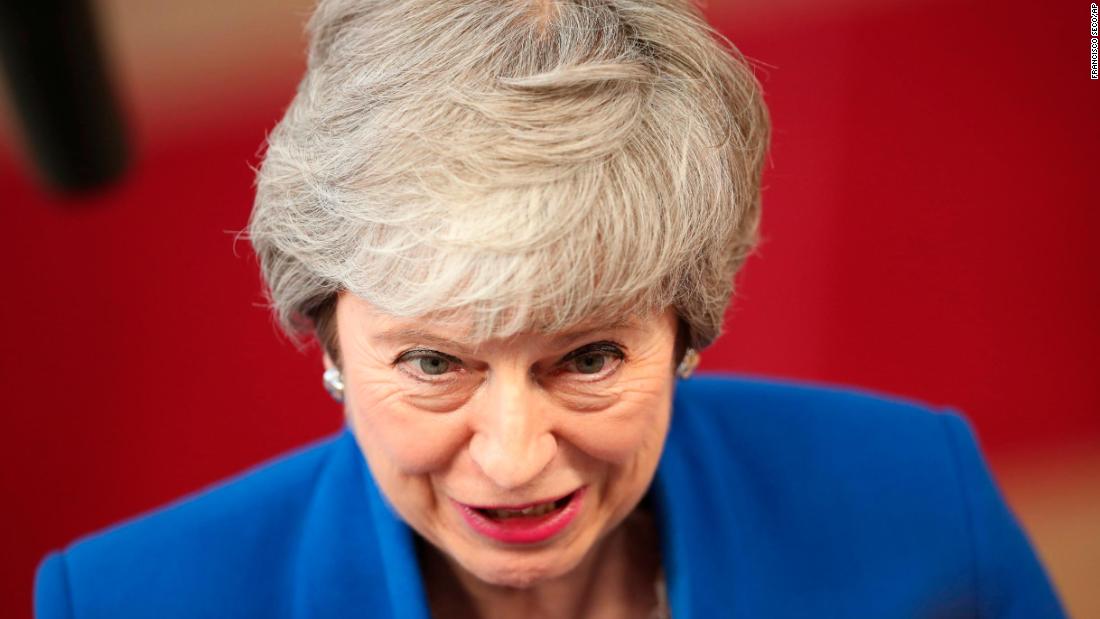
3. Brexit delayed (again): The European Union has granted Britain a six-month delay to Brexit with an option to leave earlier if the UK parliament can agree an exit deal.
The British pound was flat on Thursday, as the news of the delay did not come as a major surprise.
Businesses and investors will be relieved that the United Kingdom has, for now, avoided crashing out of the European Union without a deal. But the delay will prolong the uncertainty that has already damaged the UK economy.
"The situation remains uncomfortable and potentially unstable," said Holger Schmieding, chief economist at Berenberg bank.
4. Global market overview: US stock futures were pointing lower. European markets opened mixed, following a downbeat trading session in Asia.
Wall Street on Wednesday largely shrugged off minutes from last month's Federal Reserve meeting, which showed the US central bank acknowledged the threat of a global growth slowdown and didn't anticipate an interest rate hike this year. The Dow Jones industrial average closed flat. The S&P 500 added 0.4% and the Nasdaq gained 0.7%.
5. Earnings and economics: Rite Aid (RAD) will release earnings before the open.
The International Energy Agency said Thursday that OPEC crude oil production dropped in March to 30.1 million barrels a day, roughly 3.3 million barrels a day below the cartel's sustainable capacity. Lower supply, which results from deliberate production cuts and sanctions, has helped pushed US oil prices up 50% to $64 per barrel from $42.53 on Christmas Eve.
6. Coming this week:
ThursdayRite Aid (RAD) earnings; Disney (DIS) investor day; India election polling begins
FridayJPMorgan Chase (JPM) and Wells Fargo (WFC) earnings; China export data

Let's block ads! (Why?)


https://www.cnn.com/2019/04/11/investing/premarket-stocks-trading/index.html

2019-04-11 09:00:00Z
52780264816147

Growth woes, trade tension douse rally in Asian shares - Investing.com

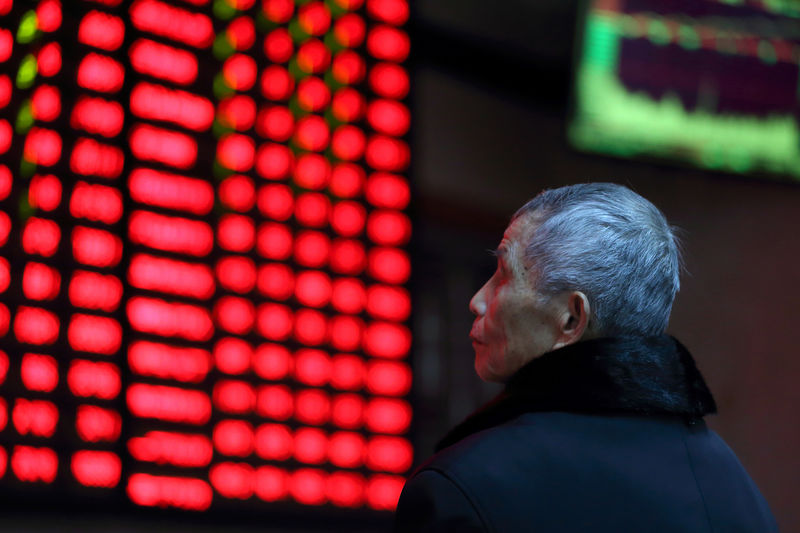
© Reuters. FILE PHOTO: A man looks on in front of an electronic board showing stock information at a brokerage house in Nanjing © Reuters. FILE PHOTO: A man looks on in front of an electronic board showing stock information at a brokerage house in Nanjing

By Swati Pandey

SYDNEY (Reuters) - Asian stocks stepped back from near eight-month highs on Thursday and the dollar eased as cautious European and U.S. central banks reinforced investors' worries about the slowing global economy and trade protectionism.

Spreadbetters pointed to a subdued start for Europe, with Eurostoxx 50 futures flat while futures for Germany's and London's opened open lower.

Risky assets have been volatile so far this year while bonds have rallied on fears of a recession in the United States and the possibility of a sharper slowdown in other major economies including the euro zone.

Also weighing on sentiment, U.S. President Donald Trump has escalated trade tensions by threatening new tariffs on goods from the European Union, even as the Sino-U.S. trade dispute remains unresolved.

All those risks pulled down Asian equities on Thursday.

MSCI's broadest index of Asia-Pacific shares outside Japan slipped 0.4 percent after four straight days of gains took it to the highest since last August. Japan's reversed early losses to end 0.1 percent higher.

Losses in Asia were led by Chinese shares, with the blue-chip CSI300 index off 1.7 percent while Hong Kong's stumbled 0.7 percent.

Australian shares also lost ground, pressured by political uncertainty after the prime minister called a national election for May 18.

"Traders continue to operate in a ‘wait and watch’ mode as they look for the next opportunity in a cautious market," said Nick Twidale, Sydney-based analyst at Rakuten Securities Australia. "Two big event risks are now behind us with the ECB and Fed."

But, Twidale said, investors were still on the lookout for a trigger that would push markets out of their familiar trading ranges.

On Wednesday, the European Central Bank (ECB) kept its loose policy stance and warned that threats to global economic growth remained. The ECB has already pushed back its first post-crisis interest rate hike, and President Mario Draghi raised the prospect of more support for the struggling euro zone economy if its slowdown persisted.

"If, as we expect, growth in the euro-zone continues to disappoint over the coming months, we think that ECB policymakers will adopt an even more accommodative stance," analysts at Capital Economics wrote in a note.

While easy monetary conditions are generally a boon for equities as investors go hunting for yield, share price performance could take a hit if corporate earnings suffer in a slowing economy.

'GREAT RETREAT'

Separately, data showed U.S. consumer prices increased by the most in 14 months in March but underlying inflation remained benign against a backdrop of slowing global economic growth.

Minutes from a March 19-20 meeting of Federal Reserve policymakers showed they agreed to be patient about any changes to interest rate policy as they saw the U.S. economy weathering a global slowdown without a recession in the next few years.

In currencies, the British pound held on to gains after European leaders agreed to extend the deadline for UK to leave the union to the end of October, averting a potential crash out of the bloc on Friday with no divorce deal but threatening more months of uncertainty.

Sterling has stayed in a triangle holding pattern between $1.2945 and $1.3380 during the past month or so. It was last at $1.3080.

The fell for a fourth straight day to 96.933 against a basket of major currencies. The euro was barely changed at $1.1275 while the Japanese yen was a shade weaker at 111.11 per dollar after three days of gains.

In commodities, futures eased 27 cents to $71.46 a barrel. dipped 30 cents to $64.31.

Gold hovered near a two-week top on Thursday at $1,306.97 an ounce.

Let's block ads! (Why?)


https://www.investing.com/news/stock-market-news/growth-woes-trade-tension-douse-rally-in-asian-shares-1833143

2019-04-11 06:42:00Z
CBMibmh0dHBzOi8vd3d3LmludmVzdGluZy5jb20vbmV3cy9zdG9jay1tYXJrZXQtbmV3cy9ncm93dGgtd29lcy10cmFkZS10ZW5zaW9uLWRvdXNlLXJhbGx5LWluLWFzaWFuLXNoYXJlcy0xODMzMTQz0gEA