Selasa, 16 April 2019

Bank of America posts another record quarterly profit on strength of Main Street lending - CNBC

Bank of America beat analysts' estimates for profit as it cut expenses more than expected and posted a 25% surge in earnings at its consumer banking division.

The bank said first quarter profit rose 6% to $7.3 billion, or 70 cents a share, according to a Tuesday release, exceeding analysts' estimate of 66 cents a share. Revenue was roughly unchanged from a year earlier at $23 billion, essentially meeting analysts' estimates.

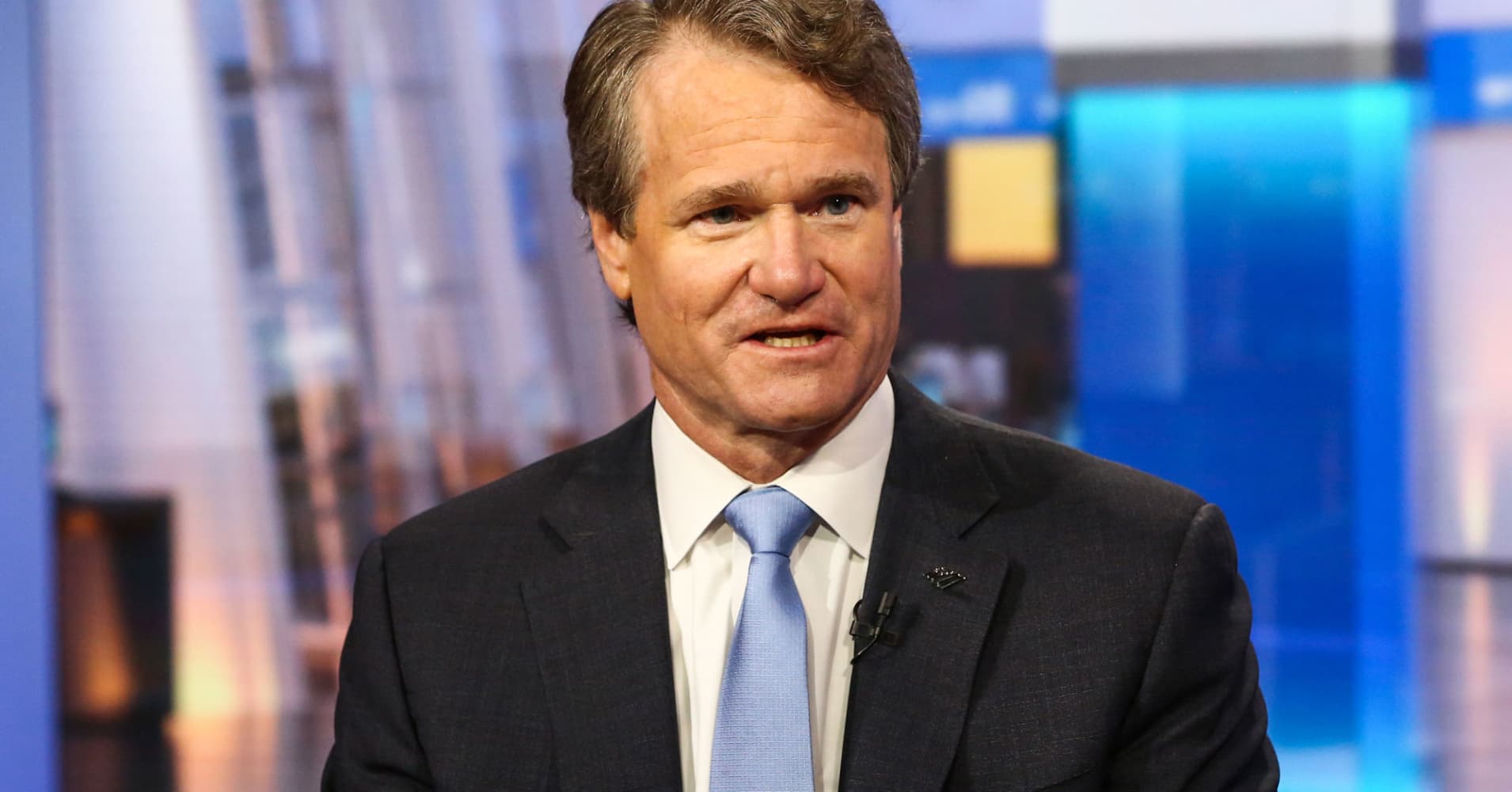
Under CEO Brian Moynihan, the megabank delivered its second straight record quarterly profit while methodically working costs down. Expenses fell 4% to $13.2 billion, almost $500 million below analysts' estimate. The bank's record profits have come despite tough conditions for Wall Street trading desks.

"Economic growth and consumer activity in the U.S. continue to be solid, businesses of every size are borrowing and driving the economy, and asset quality is strong," Moynihan said in the release. "It was a challenging capital markets environment but our team and platform are optimized to serve clients and generate stable revenues across a range of market conditions over time."

The company's net interest yield, a key metric of profitability for a bank's core lending activities, rose 9 basis points to 2.51%, edging out analysts' 2.48% estimate. Loans across the firm's consumer and commercial businesses rose at least 3%, while deposits rose 5% to $1.4 trillion.

Those factors were most evident in the firm's biggest division, its consumer lending business, which posted a 25% increase in profit to $3.2 billion. It managed that feat by boosting revenue in the business 7% to $9.6 billion while reducing costs by almost $200 million.

That helped offset a weak quarter in its global markets division, where profit slumped 26% to $1 billion. Revenue dropped 13% on weak trading results and lower investment banking fees. Equities trading revenue fell 22%, while fixed income declined 8%.

The firm's other two divisions generated positive results. Its global banking business posted a 2% profit increase to $2 billion. Wealth management profit rose 14% to $1 billion.

Shares of the bank climbed 0.4% in premarket trading after earlier dipping about 1%.

Now in his 10th year leading Bank of America, the second biggest U.S. lender by assets, Moynihan has focused on methodically trimming costs while looking for profit opportunities that fit his "responsible growth" mantra.

More recently, he has announced that the company's success will be shared with employees: The bank is raising its minimum wage to $20 an hour over the next two years, the highest rate among the megabanks.

To tighten its grip on retail banking customers, Bank of America is also planning to release a digital financial coach for its 66 million customers in the fall.

The bank's shares have climbed more than 20% this year, outperforming most of its peers and the KBW Bank Index.

Here's what Wall Street expected:
Earnings: 66 cents a share, a 5.7% increase from a year earlier, according to Refinitiv.
Revenue: $23.3 billion, almost unchanged from a year earlier.
Noninterest expense: $13.7 billion, according to FactSet
Trading Revenue: Fixed income $2.26 billion, Equities $1.21 billion

Let's block ads! (Why?)


https://www.cnbc.com/2019/04/16/bac-q1-2019-earnings.html

2019-04-16 11:51:29Z
52780270013535

Bank of America posts another record quarterly profit on strength of Main Street lending - CNBC

Bank of America beat analysts' estimates for profit as it cut expenses more than expected and posted a 25% surge in earnings at its consumer banking division.

The bank said first quarter profit rose 6% to $7.3 billion, or 70 cents a share, according to a Tuesday release, exceeding analysts' estimate of 66 cents a share. Revenue was roughly unchanged from a year earlier at $23 billion, essentially meeting analysts' estimates.

Under CEO Brian Moynihan, the megabank delivered its second straight record quarterly profit while methodically working costs down. Expenses fell 4% to $13.2 billion, almost $500 million below analysts' estimate. The bank's record profits have come despite tough conditions for Wall Street trading desks.

"Economic growth and consumer activity in the U.S. continue to be solid, businesses of every size are borrowing and driving the economy, and asset quality is strong," Moynihan said in the release. "It was a challenging capital markets environment but our team and platform are optimized to serve clients and generate stable revenues across a range of market conditions over time."

The firm's biggest division, its consumer lending business, posted a 25% increase in profit to $3.2 billion. It managed that feat by boosting revenue in the business 7% to $9.6 billion while reducing costs by almost $200 million.

That helped offset a weak quarter in its global markets division, where profit slumped 26% to $1 billion. Revenue dropped 13% on weak trading results and lower investment banking fees.

The firm's other two divisions posted positive results. It's global banking business posted a 2% profit increase to $2 billion. Wealth management profit rose 14% to $1 billion.

Shares of the bank dipped 1% in premarket trading at 6:59 a.m.

Moynihan has focused on methodically trimming costs while looking for profit opportunities that fit his "responsible growth" mantra. More recently, he has announced that the company's success will be shared with employees: The bank is raising its minimum wage to $20 an hour over the next two years, the highest rate among the megabanks.

To tighten its grip on retail banking customers, Bank of America is also planning to release a digital financial coach for its 66 million customers in the fall.

The bank's shares have climbed more than 20% this year, outperforming most of its peers and the KBW Bank Index.

Here's what Wall Street expected:
Earnings: 66 cents a share, a 5.7% increase from a year earlier, according to Refinitiv.
Revenue: $23.3 billion, almost unchanged from a year earlier.
Noninterest expense: $13.7 billion, according to FactSet
Trading Revenue: Fixed income $2.26 billion, Equities $1.21 billion

Let's block ads! (Why?)


https://www.cnbc.com/2019/04/16/bac-q1-2019-earnings.html

2019-04-16 10:47:02Z
52780270013535

4 Reasons Why Delisting BSV Was the 'Right Thing to Do' for Binance - Bitcoinist

Binance delisting Bitcoin SV (BSV) is forcing other exchanges like Kraken and Shapeshift to follow. Let’s take a look at the implications of this unprecedented move for the world’s biggest exchange. 


‘Satoshi’s Vision’ Should Have Seen It Coming

Yesterday, the biggest bitcoin exchange by volume, Binance, announced it would delist Bitcoin SV (BSV) in a stunning move. Citing the failure to meet high standards, CEO Changpeng ‘CZ’ Zhao pulled the plug on the altcoin claiming to be the ‘original’ Bitcoin.

CZ first issued a warning last week after BSV financiers Craig Wright and Calvin Ayre threatened to sue a member of the Bitcoin community for libel.

changpeng zhao cz binance

“Craig Wright is not Satoshi,” Zhao retaliated. “Anymore of this sh!t, we delist!”

Bit the sh!t kept flowing. Ayre and some other BSV supporters even urged the CEO to follow through with the threat calling Binance “a scammy bucket shop.”

Finally, Binance dropped the bomb on Monday, which CZ said was “the right thing” to do.

The news was largely received with praise by online commentators. Ayre, however, was indignant calling the move “unlawful.”

Kraken Will Likely Delist SV Next

As Bitcoinist reported, last week, Morgan Creek cofounder Anthony Pompliano called on every major exchange to delist BSV “simultaneously” on May 1st.

But with Binance pulling the trigger much earlier, other companies are already following suit.

Blockchain announced it would drop support by May 15th. “After careful consideration, we have determined to end all support of BSV within the Blockchain Wallet by May 15, 2019,” they wrote.

Shapeshift also jumped on the bandwagon delisting the altcoin much sooner.

“We stand with Binance and CZ’s sentiments,” wrote CEO Erik Voorhees.

We’ve decided to delist Bitcoin SV from Shapeshift within 48 hrs.

Bitcoin exchange Kraken, meanwhile, revealed it’s also considering taking action. It posted a public poll asking whether BSV should be removed.

With over 61 thousands respondents so far, the result suggest that Kraken will be the next major exchange to drop BSV. Overwhelmining, more than 70 percent said that Kraken should delist the altcoin saying, “Yes, it’s toxic.”

Interestingly, Kraken may have even more reason to remove BSV. As Bitcoinist reported last December the exchange was sued by UnitedCorp over an alleged complot to hijack the Bitcoin Cash network following a highly contested hard-fork that spawned BSV.

4 Reasons Why Binance Will Benefit

Ultimately, the decision to drop BSV could bring a slew of benefit for world’s biggest exchange for many reasons.

First, BSV trading volume on the platform was negligible. With Binance supporting hundreds of altcoins, dropping such a low volume coin will not hurt their business.

In fact, the number of actual BSV users is dwarfed even by its forked rival BCH. Its hashrate, despite courting miners, is a miniscule 1.6 percent of Bitcoin’s. Moreover, Bitcoin SV price 00 plunged immediately following the news by over 20 percent revealing its tenuous market presence.

Second, the delisting gained Binance a lot of ‘street cred’ from the community. By removing a coin that was synonymous with lawsuits, fraud and ‘Faketoshi,’ the exchange sets a precedent of industry self-regulation.

Third, it establishes Binance as the de facto leader among exchanges. By following through with his warning, the CEO demonstrated that he will defend his principles, like a true leader is expected to do.

Fourth, BSV is now a pariah. This means that other exchanges who *do not* delist it moving forward will lose credibility in the eyes of the public, further strenghtening Binance’s position.

It will also discourage exchanges from listing questionable Bitcoin-branded ‘forks’ in the future.

Case in point:

Will delisting BSV benefit Binance in the long run? Share your thoughts below!


Images via Shutterstock, twitter, coin.dance

The Rundown

Let's block ads! (Why?)


https://bitcoinist.com/binance-delist-bitcoin-sv-bsv-benefit/

2019-04-16 09:02:18Z
CBMiPWh0dHBzOi8vYml0Y29pbmlzdC5jb20vYmluYW5jZS1kZWxpc3QtYml0Y29pbi1zdi1ic3YtYmVuZWZpdC_SAQA

Chevron says Dutch Supreme Court rejects Ecuador's $9.5 billion claim - Reuters

FILE PHOTO: A Chevron gas station sign is seen in Del Mar, California, in this April 25, 2013 file photo. REUTERS/Mike Blake

(Reuters) - The Supreme Court of the Netherlands dismissed Ecuador’s attempts to annul decisions of an international arbitral tribunal that ordered Ecuador to prevent enforcement of a $9.5 billion judgment against Chevron Corp anywhere in the world, the U.S. oil major said on Tuesday.

Chevron said the Dutch court’s decision upholds rulings of two Dutch lower courts which rejected Ecuador’s attempts to annul those awards.

“The Dutch supreme court found that the challenged arbitral awards are consistent with public policy and justified to prevent irreversible harm to Chevron,” the company said.

Earlier this month, the Supreme Court of Canada had dismissed claims attempting to force Chevron’s Canadian unit to pay the $9.5 billion judgment handed down in Ecuador against the company over pollution in the Andean country.

Residents of Ecuador’s Lago Agrio region have been trying to force Chevron to pay for water and soil contamination caused from 1964 to 1992 by Texaco, which Chevron acquired in 2001.

The villagers obtained a judgment against Chevron in Ecuador in 2011.

The latest decision adds to several court victories that Chevron has won against the plaintiffs and its legal team in this case.

Reporting by Philip George and Kanishka Singh in Bengaluru; Editing by Gopakumar Warrier

Let's block ads! (Why?)


https://www.reuters.com/article/us-chevron-netherlands-ecuador/chevron-says-dutch-supreme-court-rejects-ecuadors-95-billion-claim-idUSKCN1RS0DE

2019-04-16 05:44:00Z
CBMijwFodHRwczovL3d3dy5yZXV0ZXJzLmNvbS9hcnRpY2xlL3VzLWNoZXZyb24tbmV0aGVybGFuZHMtZWN1YWRvci9jaGV2cm9uLXNheXMtZHV0Y2gtc3VwcmVtZS1jb3VydC1yZWplY3RzLWVjdWFkb3JzLTk1LWJpbGxpb24tY2xhaW0taWRVU0tDTjFSUzBERdIBNGh0dHBzOi8vbW9iaWxlLnJldXRlcnMuY29tL2FydGljbGUvYW1wL2lkVVNLQ04xUlMwREU

Goldman Sachs leaves Wall Street wanting more - Financial Times

David Solomon’s early months as chief executive of Goldman Sachs have been long on rhetoric, as he promised to take digital disruption to the next level and rigorously review the firm’s existing business, all the while embracing a new era of transparency and introducing a millennial-friendly “casual everyday” dress code.

But for all the talk of future-proofing one of Wall Street’s most venerable institutions, the bank’s quarterly update on Monday failed to encourage investors looking for signs of Goldman’s strategic rebirth. Its shares fell nearly 4 per cent, bringing their decline since Mr Solomon took over in October to 11 per cent. That makes Goldman the worst performer of the big six US banks since he became chief executive.

“So far, there has been sound and fury . . . but little in terms of evidence (or progress) or recognition from investors,” said Wells Fargo banks analyst Mike Mayo, adding that Goldman’s price-to-book value of about 0.95 is “one of its lowest non-crisis valuations in history”.

Jason Goldberg, banks analyst at Barclays, said that while there had “definitely been progress” since Mr Solomon took over, there was “a lot more work that can be done”.

Here is Mr Solomon’s to-do list:

The master plan

The master plan to take Goldman to the next era has been the single biggest talking point among investors and analysts since Lloyd Blankfein’s 12-year reign as chief executive ended last year. Mr Solomon and his team promised a “front to back” review that would assess resource allocations and priorities across the business. An update was originally promised in “the spring” of 2019. On Monday, Goldman said the “comprehensive update” would come in the first quarter of 2020, while promising incremental progress reports before then. Many analysts were not pleased.

“Ultimately, we need to see his strategic plan and he needs to execute on it before we can really judge him,” said Christian Bolu, banks analyst with Autonomous, who believes Mr Solomon is “doing the right things (by) trying to move the business away from slow-growth legacy businesses to faster growing ones”.

Fixed income revamp

Fixed income trading was the problem child at Goldman when Mr Solomon took over. The bank posted its worst commodities year in 2017 and revenues in the fixed-income, currency and commodities division — known FICC — fell by a worse-than-peers 22 per cent between 2016 than 2018, triggering criticism that Goldman had failed to grasp secular changes in the business during the past few years.

Goldman’s FICC performance has improved relative to other Wall Street banks in the last two quarters, partly because of the bank’s low base. While Mr Solomon and his team have promised to reshape FICC for today’s opportunity, not the boom years of the past, concrete information on how this will happen has been scant.

On Monday’s earnings call, executives spoke of leveraging technology across the FICC business, cutting resources to underperforming segments and investing in more promising ones. “It’s still not clear,” said Mr Mayo, adding that while Goldman “rattled off about a dozen areas” for potential growth, he still did not know what they actually plan to do.

Mass market revolution

Just as former trading executive Mr Blankfein represented the face of Goldman in FICC’s heyday, Mr Solomon — an amateur disc jockey — became the embodiment of the bank’s mass market future. Goldman’s recent announcement of a credit card with Apple is a step in that journey, even though the financial impact of the tie-up is unclear. Mr Solomon also has plans to expand Marcus, Goldman’s online-only bank, and get deeper into managing money for wealthy Americans.

In investment banking, Mr Solomon has accelerated Goldman efforts to serve smaller corporate clients, announcing plans on Monday for a team of 100 investment bankers focusing on companies worth less than $2bn. Under Mr Solomon, Goldman is also pushing into the cash management business, an unglamorous business dominated by big commercial banks such as Citigroup, HSBC and JPMorgan Chase.

Investment banking rebound

Investment banking — and particularly the advisory end of the business where Mr Solomon built his career — has been a bright spot since he started. In the first quarter, Goldman grew advisory revenues by 51 per cent, to $900m, far better than the 12 per cent rise in advisory fees at rival JPMorgan’s in the same period. Goldman also stormed ahead of JPMorgan to clinch the number one spot for M&A and equity capital markets revenues in the year to date.

The 1MDB legacy

The fallout from Malaysia’s 1MDB money laundering and bribery scandal has hung heavily over Mr Solomon’s early months at the helm. The US Department of Justice is investigating the bank, and Malaysia is suing it for $7.5bn over Goldman’s role in helping the defunct state investment fund to raise $6.5bn, billions of which was looted. Mr Solomon on Monday said that while “nobody wants to get to a resolution on this faster than we do”, the bank did not know when the situation would be resolved.

Goldman did announce in February that it was withholding millions of dollars in payments to three former executives, including Mr Blankfein, “until more information is available” about the “ongoing government and regulatory investigations” into the 1MDB scandal. Goldman set aside a $516m for litigation and regulatory matters in the fourth quarter of 2018, the bulk of which are understood to relate to 1MDB.

Let's block ads! (Why?)


https://www.ft.com/content/2f56b28e-5fbc-11e9-a27a-fdd51850994c

2019-04-16 04:01:16Z
52780269820962

Senin, 15 April 2019

Volkswagen Is Bringing a Pickup Truck’s Worth of Forbidden Fruit to New York to Tease the Hell out of All of Us - Jalopnik

Volkswagen will be bringing their South American market-bound Tarok compact pickup truck to show everyone in New York, and the concept looks to be a pretty clever little pickup truck with some interesting bed and cab design features. The plan is to build it in Brazil for VW’s big customer bases in Brazil and Argentina and other South American countries, but the whole point of showing it in America is to gauge reactions of Americans to a pickup that isn’t absurdly huge. I personally think there’s a demand for that, but I guess we’ll see?

Oh, and even though the name sounds like it could be Spock’s half-brother who has been following whatever the Vulcan equivalent of Phish is for the past year or so, it actually seems to be a reference to the Tarok people of Nigeria. 

The truck is built on the same MQB platform that VW uses for everything from the Golf to the Atlas, so we’re talking a unibody truck here, not a body-on-frame one. It’ll be one of VW’s largest MQB-based vehicles yet, but still relatively compact for the modern truck market, at least in the U.S.

Advertisement

It’s a double-cab truck, and while that means a stunted bed length, Volkswagen’s designers have done some interesting things here, where they’ve provided a flip-down door in the rear of the cab that, when coupled with the rear seat folding down, effectively makes a longer cargo bed.

Advertisement

It’s a great idea that adds a lot of flexibility to the truck, though, to be fair, VW didn’t come up with the idea. We’ve seen it before, perhaps most bonkers-ly in the Toyota BB Open Deck, the Japanese-market variant of the Scion xB.

The truck can carry 2,271 pounds, which is pretty decent, especially when you consider that there are some Ford F-150 versions that are rated for much less than that.

Advertisement

The design of the truck fits well within VW’s current design language, with the wide, horizontal grille slats that continue to outline the headlamps, though I’m not expecting the illuminated grille bars or badge to make it to production. Otherwise, this concept seems very production-ready.

Mechanically, the truck will have VW’s 1.4-liter four making a decent 147 horsepower, and full-time all-wheel drive. As the press release claims, it should be decent off-road, too:

To demonstrate the vehicle’s off-road ability, the Tarok has an approach angle of 23.8 degrees, a departure angle of 26.4 degrees, and a breakover angle of 22.1 degrees. The minimum ground clearance is 9.6 inches.

The Tarok Concept is powered by a 1.4-liter, 147-horsepower four-cylinder turbocharged and direct-injection TSI® engine, mated to a 6-speed automatic transmission and permanent 4Motion all-wheel drive.

Advertisement

I hope there is some interest at the New York show for the truck; I think there’s some untapped demand in America for a reasonably-priced, non-colossal truck that can actually do decent work.

Volkswagen once had a player in this space, a long time ago, and it was even built right here in America. I think its time has come again. I guess we’ll have to see what all those cranky New Yorkers think.

Let's block ads! (Why?)


https://jalopnik.com/volkswagen-is-bringing-a-pickup-truck-s-worth-of-forbid-1834053725

2019-04-15 17:50:00Z
52780269397027

Best Buy names Corie Barry CEO: 5 things to know about the retailer's first female leader - Fox Business

(Courtesy: Best Buy)


Continue Reading Below

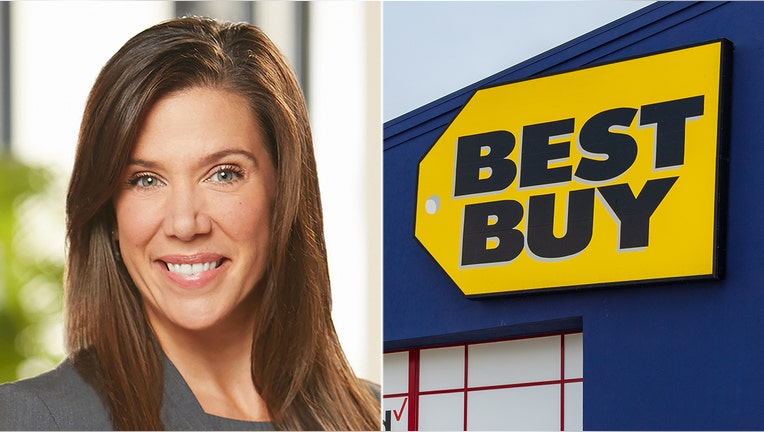
Best Buy is refreshing its top leadership naming Corie Barry as the next CEO, and the first female chief in 53 years, replacing Hubert Joly, who will become Executive Chairman of the Board, a newly created role.

TickerSecurityLastChange%Chg
BBYBEST BUY73.43-0.14-0.19%

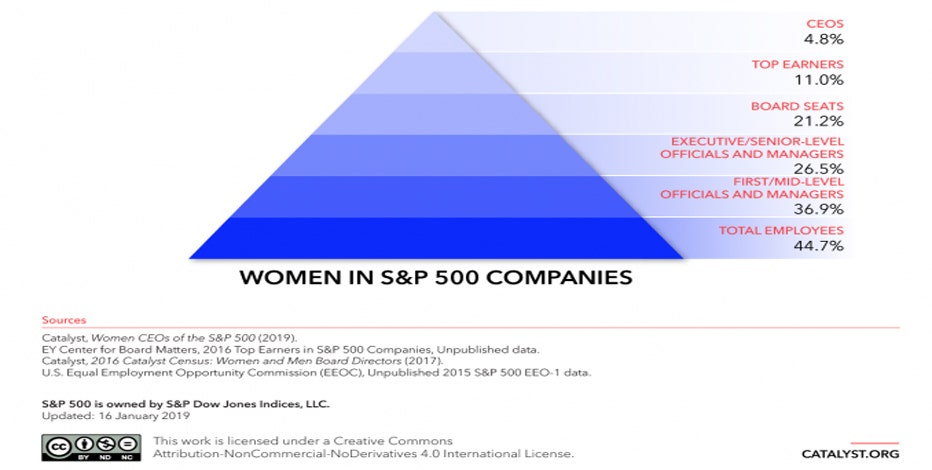
Barry, who is currently the electronic retailer’s Chief Financial and Strategic Transformation Officer, joins a relatively small club; women CEOs among S&P 500 companies. While her promotion is progress for the advancement of women, females remain woefully under represented in top leadership roles at S&P 500 companies, currently accounting for just under 5 percent of those roles, according to data compiled by Catalyst.

FOX Business takes a look at Barry’s background and experience that landed her in the C-Suite.

Climbed the Ranks:

Barry has spent over 19 years at the retailer starting her career as a financial analyst in-house and rising through the ranks to become Chief Financial Officer, a role she has held since June of 2016, according to her LinkedIn page.

MORE FROM FOXBUSINESS.COM 

Skin in the Game:

In her current CFO role, Barry holds 0.03 percent of Best Buy stock, per 2019 SEC filings as listed on Thomson One. The current value is around $6 million. By comparision, Joly's stake of 0.21 percent is valued at $39.5 million.

Domino’s Pizza:

She sits on the Board of Domino’s Pizza and is a member of the Audit Committee.

TickerSecurityLastChange%Chg
DPZDOMINOS PIZZA INC258.95+1.34+0.52%

Deliotte & Touche Alum:

Before joining Best Buy, she served as a Senior Auditor at the accounting giant Deliotte for a little over 2-years.

CLICK HERE TO GET THE FOX BUSINESS APP

Accounting Degree:

She graduated with a Bachelor’s degree in accounting and business management from The College of Saint Benedict, a liberal arts college for women in Saint Joseph, Minnesota.  Founded in 1913 by Benedictine Sisters, it is the only Benedictine college for women in the country, according to the school’s website which also notes its partnership with St. John’s University in Collegeville, Minnesota.

Let's block ads! (Why?)


https://www.foxbusiness.com/retail/best-buy-names-first-female-ceo-corie-barry

2019-04-15 18:09:38Z
52780269309588