Kamis, 18 April 2019

Zoom is worth billions more than Pinterest as both go public — even though it's half the size - CNBC

When it comes to emerging tech companies, investors are clearly rewarding growth and profitability above all else.

Videoconferencing company Zoom and social media site Pinterest both debuted on the public markets today and immediately rallied from their IPO prices. But Zoom went up significantly more, giving it an early valuation of $16.7 billion, topping Pinterest's market capitalization of nearly $13 billion.

That's a surprising development considering that Zoom is less than half the size of Pinterest, based on the latest full year of sales. Zoom reported revenue of $330.5 million, while Pinterest generated sales of $755.9 million. Pinterest generates revenue by selling ads, while Zoom sells its videoconferencing software to businesses, including 344 that spend over $100,000 a year.

Pinterest also has the much better-known brand, with 265 million monthly active users posting and looking at recipes, vacation pictures and photos of shoe collections.

But Zoom is growing faster: Sales grew 118% between the last two fiscal years, while Pinterest grew 60%.

Zoom is also profitable. It recorded $7.6 million in net income, while Pinterest had a net loss of $63 million.

"Zoom is that most unusual beast, which is a profitable IPO coming out of the tech sector," said Roger McNamee, co-founder of investment firm Elevation Partners on CNBC on Thursday morning. "From a stock market point of view, that's the one I find really compelling."

By creating a product that's spread rapidly in the corporate world without having to spend a ton on marketing, and by keeping development costs relatively low with a big development team in China, Zoom has reached profitability much faster than most tech companies.

Zoom also raised money at a much more measured pace than Pinterest and other high-profile tech start-ups such as Uber, Lyft and Slack. According to Crunchbase, Zoom raised $160 million as a private company while Pinterest raised about $1.5 billion.

That's allowed founder Eric Yuan to keep ownership of about 20 percent of the company.

By contrast, Pinterest co-founder and CEO Ben Silbermann owns 11 percent of that company, and Evan Sharp, the other co-founder, controls 2.1 percent.

WATCH: Opening Bell, April 18, 2019

Let's block ads! (Why?)


https://www.cnbc.com/2019/04/18/zoom-is-worth-more-than-pinterest-after-their-ipos.html

2019-04-18 16:18:34Z
52780270670498

Zoom begins its first day of trading at $65, surging 80% - CNBC

Videoconferencing software company Zoom made its debut Thursday on the Nasdaq under the ticker symbol "ZM," and surged 80% to $65.

The initial pop gives Zoom a stock market value of $16.7 billion. Zoom is among a growing crop of tech companies going public in 2019, but with a twist: it's profitable.

After filing to go public on March 22, Zoom estimated two weeks later that it would price shares in the range of $28 to $32. Zoom increased the range to between $32 and $35 this week, and on Wednesday it priced above the top of that range, valuing the company at $9.2 billion.

Zoom raised $356.8 million after selling 9.91 million shares in the IPO. Existing shareholders, including Emergence Capital, Sequoia and CEO Eric Yuan, sold another 11 million shares.

The IPO market is picking up, with Lyft and PagerDuty debuting in recent weeks, and Pinterest opening alongside Zoom on Thursday. Uber released its IPO filing earlier this month, while Postmates and Slack have confidentially filed.

Typically at the time these companies hit the market they're still burning significant amounts of cash. Zoom is an exception, in that it earned $7.58 million in net income last year. Revenue surged 118% to $330.5.

"We are impressed with Zoom's rapid growth while generating both cash and GAAP profitability, and enterprise traction," Rishi Jaluria, an analyst at D.A. Davidson, wrote in a note March 25. "Furthermore, our due diligence suggests Zoom is gaining mindshare and could become the de facto standard for videoconferencing."

At its opening price, Zoom is valued at about 50 times its enterprise value, which is by far the highest multiple for U.S. software companies. Zscaler, a security software company, has an enterprise value to sales ratio of 30, according to FactSet.

WATCH: Study finds IPO first day returns don't predict long run returns

Let's block ads! (Why?)


https://www.cnbc.com/2019/04/18/zoom-ipo-stock-begins-trading-on-nasdaq.html

2019-04-18 15:25:45Z
52780270670498

Amazon will no longer sell Chinese goods in China - CNN

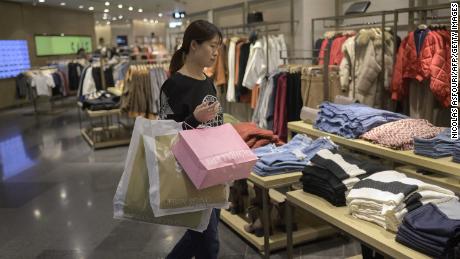
It will close its marketplace in China in the coming months, meaning Amazon customers in the country will no longer be able to buy goods from Chinese merchants.
Amazon (AMZN) did not explain why it was withdrawing its marketplace service, saying only it will instead focus on selling goods shipped from other countries into China.
China will overtake the US as the world's biggest retail market this year
"We are notifying sellers we will no longer operate a marketplace on Amazon.cn, and we will no longer be providing seller services on Amazon.cn effective July 18," the company said in a statement.
Amazon's platform competes for Chinese sellers with Tmall, owned by the country's e-commerce leader Alibaba (BABA).
Amazon first entered the Chinese market 15 years ago, when it acquired an online book retailer, but it has struggled amid fierce competition. Research suggests that the company's market share in China was miniscule compared to local rivals.
China's online retail market is huge, notching up about $2 trillion in sales annually, according to research firmer eMarketer. The US market is worth just over one quarter of that.
The Chinese market is dominated by Alibaba, which accounts for more than half of all transactions, and local rival JD.com (JD), eMarketer data shows.
"There is too much domestic competition and Amazon lacks the kind of brand awareness that Tmall or JD.com have," said Ben Cavender, an analyst at China Market Research Group. "That leaves Amazon in a position where it has to spend a lot of money to acquire customers while also competing aggressively with multiple strong players on price."
Singles Day, Alibaba's annual online spending blitz, regularly racks up bigger sales than Black Friday and Cyber Monday combined.
Users logging onto Amazon's Chinese site after July 18 will see products sold from its global store, the company said.
Robot waiters and snail pizza: What US fast food brands do to please Chinese diners
"Over the past few years, we have been evolving our China online retail business to increasingly emphasize cross-border sales, and in return we've seen very strong response from Chinese customers," Amazon said.
It will retain its other operations in China, such as cloud computing services. It will also continue to sell its Kindle e-readers and content in the country.
"Amazon's commitment to China remains strong. We have built a solid foundation here in a number of successful businesses and we will continue to invest and grow in China," the company added.

Let's block ads! (Why?)


https://www.cnn.com/2019/04/18/tech/amazon-closes-china/index.html

2019-04-18 14:13:00Z
CAIiEK58uAXzxoJsII4L2ufD-UwqGQgEKhAIACoHCAowocv1CjCSptoCMKrxrwU

What's moving markets today: Live updates - CNN

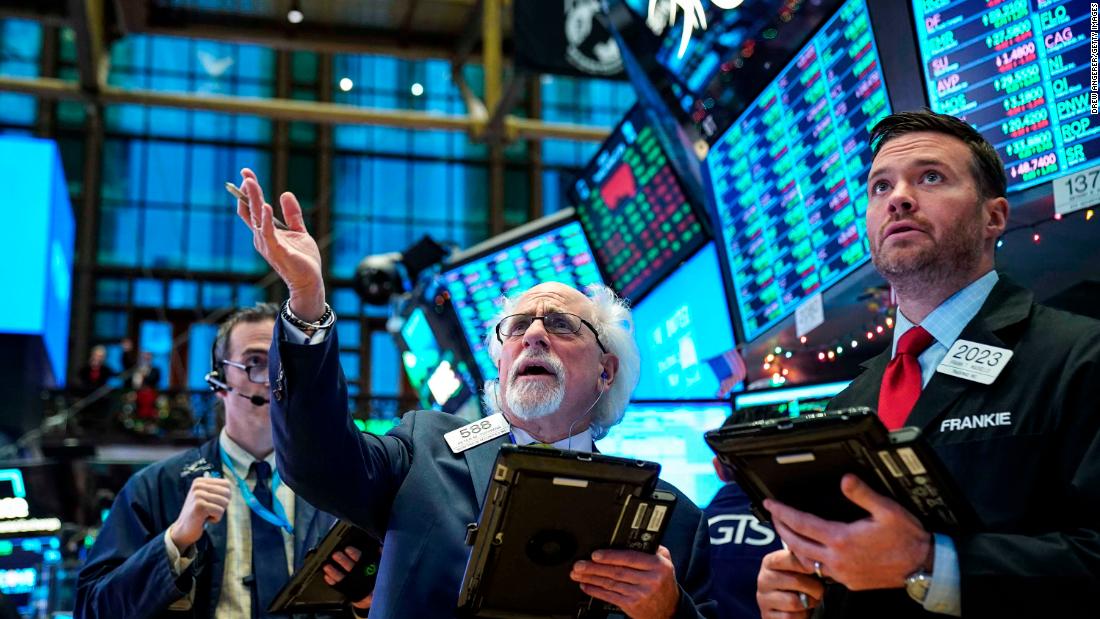
Do markets care about the Mueller report? No.

Investors have already digested stories about a chaotic White House. They know the president lashes out on Twitter and there’s no secret about his style of governing. They know Washington is a mess.

Unless there is some bombshell that threatens his presidency and unless the Barr summary has dramatically underplayed the Mueller report concerns, the redacted Mueller report is a non-event.

Removing the uncertainty about the Russia probe could actually be a positive for stocks. Besides the report, it is earnings season as usual, with banks reporting this week and tech companies rolling out next week.

Tech stocks are on fire this year: Facebook (FB) is up more than 30%, Amazon (AMZN) is up 25% and Microsoft (MSFT) is up 20%.

The United States and China are still working toward a trade deal with new in-person talks scheduled, moving trade concerns to the back burner for now.

Let's block ads! (Why?)


https://www.cnn.com/business/live-news/stock-market-news-today-041819/index.html

2019-04-18 13:51:00Z
CBMiUGh0dHBzOi8vd3d3LmNubi5jb20vYnVzaW5lc3MvbGl2ZS1uZXdzL3N0b2NrLW1hcmtldC1uZXdzLXRvZGF5LTA0MTgxOS9pbmRleC5odG1s0gFUaHR0cHM6Ly9hbXAuY25uLmNvbS9jbm4vYnVzaW5lc3MvbGl2ZS1uZXdzL3N0b2NrLW1hcmtldC1uZXdzLXRvZGF5LTA0MTgxOS9pbmRleC5odG1s

What's moving markets today: Live updates - CNN

Do markets care about the Mueller report? No.

Investors have already digested stories about a chaotic White House. They know the president lashes out on Twitter and there’s no secret about his style of governing. They know Washington is a mess.

Unless there is some bombshell that threatens his presidency and unless the Barr summary has dramatically underplayed the Mueller report concerns, the redacted Mueller report is a non-event.

Removing the uncertainty about the Russia probe could actually be a positive for stocks. Besides the report, it is earnings season as usual, with banks reporting this week and tech companies rolling out next week.

Tech stocks are on fire this year: Facebook (FB) is up more than 30%, Amazon (AMZN) is up 25% and Microsoft (MSFT) is up 20%.

The United States and China are still working toward a trade deal with new in-person talks scheduled, moving trade concerns to the back burner for now.

Let's block ads! (Why?)


https://www.cnn.com/business/live-news/stock-market-news-today-041819/index.html

2019-04-18 12:56:00Z
52780270670498

US weekly jobless claims lowest since 1969; unemployment rolls shrink - CNBC

The number of Americans filing applications for unemployment benefits fell to more than a 49-1/2-year low last week, pointing to sustained strength in the economy.

Initial claims for state unemployment benefits dropped 5,000 to a seasonally adjusted 192,000 for the week ended April 13, the lowest level since September 1969, the Labor Department said on Thursday. Data for the prior week was revised to show 1,000 more applications received than previously reported.

Claims have now declined for five straight weeks. Economists polled by Reuters had forecast claims would rise to 205,000 in the latest week.

The Labor Department said no states were estimated last week. Claims tend to be volatile around this time of the year because of the different timings of the Easter holiday and spring breaks.

The four-week moving average of initial claims, considered a better measure of labor market trends as it irons out week-to-week volatility, fell 6,000 to 201,250 last week, the lowest reading since November 1969.

The claims data covered the survey week for the nonfarm payrolls portion of April's employment report. The four-week average of claims decreased by 19,250 between the March and April survey weeks. This suggests solid employment growth after payrolls increased by 196,000 jobs in March.

Though the trend in hiring has slowed, job gains remain above the roughly 100,000 needed per month to keep up with growth in the working-age population. The unemployment rate is at 3.8 percent, near the 3.7 percent Federal Reserve officials project it will be by the end of the year.

A report from the Fed on Wednesday showed "modest-to-moderate growth" in employment in a majority of the U.S. central bank's districts in April. The Fed's "Beige Book" report of anecdotal information on business activity collected from contacts nationwide showed notable worker shortages "most commonly in manufacturing and construction."

Thursday's claims report showed the number of people receiving benefits after an initial week of aid declined 63,000 to 1.65 million for the week ended April 6. The four-week moving average of the so-called continuing claims dropped 22,750 to 1.71 million.

Let's block ads! (Why?)


https://www.cnbc.com/2019/04/18/weekly-jobless-claims.html

2019-04-18 12:31:14Z
CAIiEI-HS5isc4urGzeAlPwLB5IqGQgEKhAIACoHCAow2Nb3CjDivdcCMIvwngY

T-Mobile's Money banking app makes its nationwide debut - Engadget

T-Mobile's entry into the mobile banking game is now available nationwide, a bit over four months after it first rolled out as a pilot program. The mobile-first checking account is called T-Mobile Money, and it comes with some sweet perks for the carrier's subscribers. It has no fees and offers a four percent Annual Percentage Yield (APY) for users' money up to $3,000 -- everything above that will have a one percent APY -- so long as they sign up with their T-Mobile ID and deposit at least $200 each month.

If users can stick to the required minimum deposit, they can also opt in for the Got Your Back overdraft. That gives them a $50 overdraft protection, so they can withdraw a few more bucks without incurring penalties for when times are especially tough. The app also gives them a way to transfer money, make mobile check deposits, pay bills, send checks and even pay with mobile wallets, including Apple Pay, Google Pay and Samsung Pay.

T-Mobile created the service in partnership with BankMobile, a division of Customers Bank. An account comes with a Mastercard debit card subscribers can use to pay for purchases or for withdrawals at 55,000 Allpoint ATMs worldwide. Anyone interested can use the service either via its official website or its Android and iOS app, which are now available for download from Google Play and Apple App Store, respectively. Residents from any of the 50 US states 18 and older with a social security number can sign up for an account. Later this year, the service will become available to more potential users when it makes its way to Puerto Rico.

T-Mobile

Let's block ads! (Why?)


https://www.engadget.com/2019/04/18/t-mobile-money-nationwide-rollout/

2019-04-18 11:00:01Z
52780271368122