Minggu, 31 Maret 2019

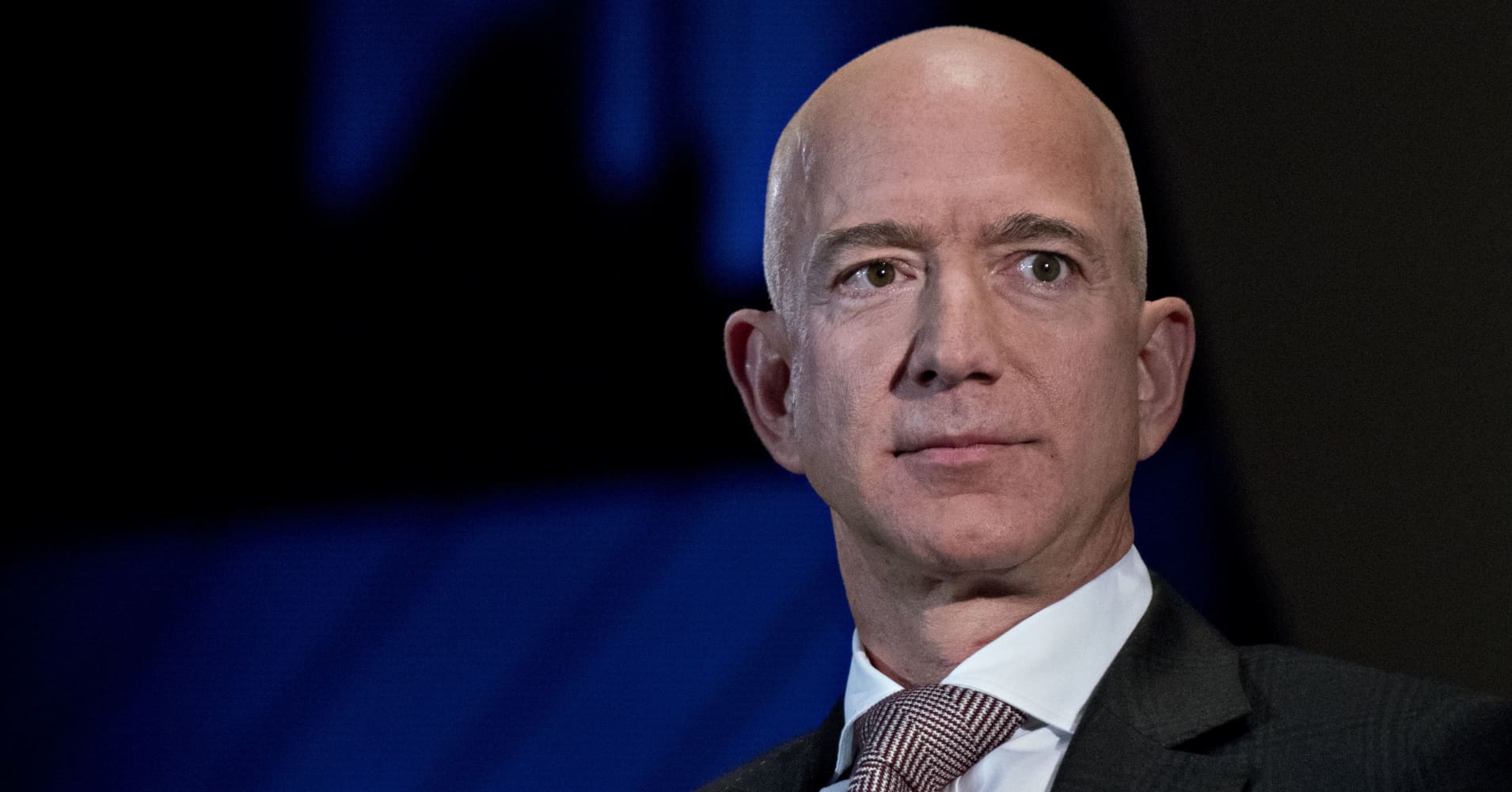
Jeff Bezos' security consultant accuses the Saudi government of hacking Amazon CEO's phone, linking them extortion attempt - Business Insider

jeff bezosAlex Wong/Getty Images

  • Jeff Bezos' chief security consultant has said the Saudi government hacked the Amazon chief's phone and accessed his private information.
  • Gavin de Becker wrote in a column published Saturday that he could conclude that his investigation found that Saudis had gained access to Bezos' private information. 
  • The investigation was launched after the National Enquirer published an exposé into Bezos' relationship and the paper threatened to publish Bezos' intimate photos and text messages. 

Jeff Bezos' security chief Gavin de Becker said in a column published Saturday that the Saudi government had access to the Amazon chief's phone and gained private information from it.

De Becker wrote in The Daily Beast that he could confirm the connection after an extensive investigation into the publication, which was sparked by reports targeting Bezos in tabloids owned by American Media Inc.

"Our investigators and several experts concluded with high confidence that the Saudis had access to Bezos' phone, and gained private information," de Becker wrote. "As of today, it is unclear to what degree, if any, AMI was aware of the details."

In February, Bezos alleged in a widely-read Medium post that the National Enquirer tried to blackmail him by threatening to publish intimate text messages and photos. He also revealed that he had launched an investigation after a January exposé on his relationship with Sanchez to find out how the paper obtained the private information in the piece. 

Read more: These are the main players in the explosive saga of Jeff Bezos' love life and his war with the National Enquirer

Bezos drew a connection in the letter between the kingdom of Saudi Arabia and American Media Inc., specifically accusing owner David Pecker of trying to blackmail him unless he publicly declared that the tabloid's reporting on him had no political motivation.

Days after Bezos' post, AMI attorney Elkhan Ambramowitz doubled down on the paper's commitment to their explanation that Sanchez's brother had been the only source, flatly denying any connection to the Trump administration and the media company's ties to Saudi Arabia.

De Becker points to an appearance by Abramowitz on ABC as perhaps the most concerted effort to throw blame on Sanchez's brother for the revealing materials in the January story, when he insisted that the source was "not Saudi Arabia" but a "person that was known to both Bezos and Ms. Sanchez." 

This statement was marred by reports from the Wall Street Journal and Page Six that said the Enquirer came to Sanchez after it knew about the relationship, de Becker said, which suggests there were other sources. 

Numerous outlets suggested that Saudi Arabia's alleged role in AMI's pursuit of Bezos was motivated by Bezos' ownership of the Washington Post, which created diplomatic issues for the country through its dogged reporting on the killing of its columnist Jamal Khashoggi in the Saudi consulate in Istanbul, Turkey, last October.

Bezos acknowledged in his February post that his ownership of the Post was a "complexifier," and De Becker wrote in the Beast that the Saudi government had been threatening Bezos since October. 

The kingdom reportedly denies any connection, as well as any responsibility for Khashoggi's death. 

De Becker also points to owner Pecker as a central figure in the paper's Saudi connections, ushering in glowing coverage for Crown Prince Mohamed Bin Salman, including an advanced copy of a magazine that the prince and his aides had a chance to edit. 

De Becker's investigation reportedly relied on interviews with "current and former AMI executives and sources," "top Middle East experts in the intelligence community," "leading cybersecurity experts who have tracked Saudi spyware," "discussions with current and former advisers to President Trump," "Saudi whistleblowers," and "people who personally know the Saudi Crown Prince Mohammed bin Salman." 

De Becker also wrote that he has turned over his investigation's findings to US federal officials and will be releasing no further details. 

Let's block ads! (Why?)


https://www.businessinsider.com/jeff-bezos-saudi-government-hacked-amazon-ceos-phone-national-enquirer-gavin-de-becker-2019-3

2019-03-31 15:05:23Z
CAIiEE-4X60JgrLKGG4B-S4oa28qLggEKiUIACIbd3d3LmJ1c2luZXNzaW5zaWRlci5jb20vc2FpKgQICjAMMJzw5wE


5 Social Security Mistakes You Probably Don't Even Realize You're Making - The Motley Fool

We all make mistakes. We make non-financial ones, such as brewing caffeinated coffee in the evening when we meant to brew some decaf, and financial ones, such as not saving and investing enough to build a sufficient war chest for retirement.

Another kind of mistake that shortchanges our comfort in retirement is a mistake we make related to Social Security. That's dangerous, since fully 48% of married elderly Social Security beneficiaries and 69% of unmarried ones get 50% or more of their income from it, according to the Social Security Administration (SSA).

The foot of a man in a suit about to step on a banana peel.

Image source: Getty Images.

Here are five Social Security mistakes many people make. You may be making one or more without even knowing it.

No. 1: Not setting up a "my Social Security" account

If you haven't yet set up a "my Social Security" account at the SSA website, you should -- for several reasons. First, it's where you can look up estimates of your future benefits at any time and see the SSA's record of your income and taxes paid into the Social Security system.

It's also good to set up this account as soon as possible because if you don't, an identity thief might. That's one way that crooks are causing massive headaches for many Americans -- posing as them online and trying to get their Social Security benefits.

No. 2: Not checking your earnings history

While you're at your my Social Security account, look over that record of your income over your entire working life and see if it looks correct. If you keep good records, you may actually be able to check it closely.

It's smart to review the record every now and then so that you can spot any possible errors and have them fixed. If the record doesn't reflect all your earnings, when it comes time to calculate (and pay!) your benefits, you'll get shortchanged.

No. 3: Not knowing your "full retirement age"

You should also find out your "full" retirement age. That's the age at which you can start collecting the full benefits to which you're entitled. It's important to know that age because it's likely to be a key part of any Social Security strategizing you may do. The full retirement age was formerly age 65 for everyone, but it's now 66, 67, or somewhere in between for most folks:

Birth Year

Full Retirement Age

1937 or earlier

65

1938

65 and 2 months

1939

65 and 4 months

1940

65 and 6 months

1941

65 and 8 months

1942

65 and 10 months

1943-1954

66

1955

66 and 2 months

1956

66 and 4 months

1957

66 and 6 months

1958

66 and 8 months

1959

66 and 10 months

1960 and later

67

Source: Social Security Administration. 

No. 4: Planning to start collecting benefits at a suboptimal time

You can make your Social Security benefit checks bigger or smaller than what you'd get if you started collecting at your full retirement age -- by starting to collect earlier or later. For every year beyond your full retirement age that you delay starting to receive benefits, you'll increase their value by about 8% -- until age 70. So delaying from age 67 to 70 can leave you with checks about 24% fatter.

That works in reverse if you start collecting early. For every year before your full retirement age that you start collecting, your benefits will shrink by about 7%. So if your full retirement age is 67 and you start collecting benefits at age 62, your checks will be about 30% smaller.

Many people aim to delay as long as they can for those fatter checks but they're not appreciating that while the checks will be bigger, there will be far fewer of them. The program is designed so that total benefits received are about the same no matter when you start collecting, if you have an average life span. Given that, and the fact that few of us know just how long we'll live, it makes plenty of sense for most people to start collecting at 62.

On the other hand, if your family has featured many people who lived well into their 90s and you can afford to delay starting to collect, it can make sense to do so.

It can also be a mistake to start collecting while you're still working -- or to take on a job with significant income while you're collecting benefits. Why? If you earn too much, you can have some of your benefits withheld. (That may be annoying, but you get that money later, so it's not a fatal error.) You may even end up with your benefits taxed.

No. 5: Not coordinating with your spouse

Finally, if you're married, be sure to coordinate when you'll start collecting benefits with your spouse. For example, you might start to collect the benefits of the spouse with the lower lifetime earnings record on time or early, while delaying starting to collect the benefits of the higher-earning spouse. That way, both of you get some income earlier, and when the higher earner hits 70, they can collect extra-large checks.

Also, should that higher-earning spouse die first, the spouse with the smaller earnings history can collect those bigger benefit checks -- as widows and widowers can choose to receive 100% of their late spouse's benefit instead of their own. (The survivor benefit is not available to those who remarry before age 60, but it is if you're at least 60 and were married for at least 10 years.)

It's worth learning more about Social Security so that you make smart decisions in order to get as much as you can out of the program. After all, you have probably been paying Social Security taxes (that "FICA" deduction on your pay stub) for your entire working life.

Let's block ads! (Why?)


https://www.fool.com/retirement/2019/03/31/5-social-security-mistakes-you-probably-dont-even.aspx

2019-03-31 12:03:00Z
52780255080319

Social Security is a lifesaver but far from perfect. Here are 3 rules we hate - USA TODAY

For better or worse, Social Security is our nation's most prized social program.

Each month, 63 million benefit checks go out, with more than a third of these recipients lifted out of poverty as a result of this guaranteed monthly payout.

While Social Security was crafted to be a financial foundation for retired workers in the mid-1930s, it's evolved into so much more, with the program also providing long-term disability insurance benefits and survivor benefits to the immediate families of deceased workers.

But for as much of a financial lifesaver as the program has been, Social Security is far from perfect. There are certain "rules" within the program that I'm fairly sure we can all agree we hate and would prefer to see gone.

Even if you're years from retirement: You need to know these Social Security tips now

When you should delay filing: Why waiting 3 more years for Social Security benefits will help this 66-year-old

Here are three such rules.

1. Taxing Social Security benefits (over certain income thresholds)

Not that I'm ranking these in any particular order, but if there were some aspect of Social Security that was more hated than any other part of the program, it would almost certainly be the taxation of Social Security benefits. In fact, a survey from Washington, D.C.-based nonprofit organization The Seniors Center, released in March 2017, found that an overwhelming 91 percent of retired Americans want the taxation of benefits shelved.

The taxation of paid benefits applies at the federal level when an individual's modified adjusted gross income plus one-half of their benefits exceeds $25,000 (or $32,000 for a couple filing jointly). Instituted in 1984, following the passage of the Amendments of 1983, this measure allowed up to 50 percent of a person's or couple's benefits to be taxed. In 1993, a second tier was introduced, allowing up to 85 percent of benefits to be taxed if a single taxpayer or couple filing jointly exceeds $34,000 or $44,000 in earned income, respectively. Although this isn't a case of double taxation, it sure as heck seems like it to a number of Social Security recipients.

Making matters worse, the income thresholds associated with this tax have never been adjusted for inflation. Thus, as more years go by, more and more seniors are being taxed on their take-home from the program. At last check, The Senior Citizens League (TSCL) estimated that 51 percent of all senior households are paying some tax on their Social Security benefits.

The icing on the cake is that 13 states also tax Social Security benefits to some varied degree. Should you face state tax on your benefits, then you would indeed have a valid gripe about double taxation.

2. Using the CPI-W to calculate COLA

Another Social Security rule we'd love to give the heave-ho to is the use of the Consumer Price Index for Urban Wage Earners and Clerical Workers (CPI-W) as the program's inflationary tether for its cost-of-living adjustments (COLA). Think of COLA as the "raise" that beneficiaries receive each year in order to keep up the rising cost of goods and services (i.e., inflation).

The problem is simple: the CPI-W does a really bad job of measuring the costs that matter to retired workers – who, may I remind you, make up 70 percent of current beneficiaries. That's because the CPI-W, as the name implies, tracks the spending habits of urban and clerical workers, who, in nearly all instances, aren't Social Security beneficiaries. Just to recap for the skimmers: The program primarily provides benefits to seniors but has an inflationary tracking index that's pegged to working-age urban and clerical workers.

Since working-age Americans and seniors spend their money very differently, it results in seniors precipitously losing purchasing power on their Social Security dollars. Expenditures that matter more to retired workers, such as housing and medical care, are given less weighting, while less-important expenses, such as entertainment, transportation, education, and apparel, bear a higher weighting in the COLA calculation. Since the year 2000, TSCL finds that the purchasing power of Social Security dollars for seniors has dropped by 34 percent.

3. Subjecting early filers to the retirement earnings test

Being subjected to the retirement earnings test is another gripe that's common among early filers.

The retirement earnings test describes an earned income limit for retired workers who've chosen to take their benefit prior to reaching full retirement age. Your full retirement age is the age at which you become eligible to receive 100 percent of your monthly payout, as determined by your birth year. If an early filer surpasses this limit, their benefits can be partially or even fully withheld by the Social Security Administration (SSA).

In 2019, early filers who won't be hitting their full retirement age this year are only allowed to earn up to $17,640 annually ($1,470 a month) without any repercussions. For every $2 in earnings above this mark, $1 in benefits is withheld. If you will reach your full retirement age this year but have yet to do so, the earning threshold is $46,920, or $3,910 a month. In this instance, $1 in benefits can be withheld for every $3 in earned income above this mark.

Even though you'll get your withheld benefits back in the form of a higher monthly payout once you hit full retirement age, the retirement earnings test is a pest because it punishes early filers who are still working and might be looking to double-dip on their income streams. It may also inadvertently harm early filers who have no choice but to claim early.

Sorry, folks, but none of these rules is going away anytime soon

Unfortunately, even though we can all agree that these Social Security rules should be shelved, there's virtually no chance of changing any of them anytime soon.

Despite our loathing for the taxation of benefits, the program simply couldn't do without the revenue it's providing on an annual basis. According to the 2018 Social Security Trustees report, the taxation of benefits will generate $561.2 billion in revenue between 2018 and 2027. If this tax were simply stopped cold turkey, Social Security's already precarious financial situation would become even direr, potentially leading to steep benefits cuts in the future.

As for the CPI-W, switching to a perceived-to-be-more-accurate inflationary measure would require bipartisan cooperation in Congress – which, as we all know, is a fairy tale. OK, maybe that's a bit cynical, but both Democrats and Republicans have proposed a "fix" for Social Security's inflationary tether, and their suggestions couldn't be further apart. Without the required 60 votes in the Senate to amend Social Security, no changes to its inflationary measure will be made.

And the retirement earnings test isn't going away, either. That's because in order to avoid a rush on early benefit claims, the SSA wants to encourage folks to save more, invest for the future, and claim their benefit (ideally) at or after their full retirement age.

It's perfectly OK to hate these three Social Security rules. Just be aware that no amount of hate is going to make them go away.

The Motley Fool has a disclosure policy.

The Motley Fool is a USA TODAY content partner offering financial news, analysis and commentary designed to help people take control of their financial lives. Its content is produced independently of USA TODAY.

Offer from the Motley Fool: The $16,728 Social Security bonus most retirees completely overlook
If you're like most Americans, you're a few years (or more) behind on your retirement savings. But a handful of little-known "Social Security secrets" could help ensure a boost in your retirement income. For example: one easy trick could pay you as much as $16,728 more... each year! Once you learn how to maximize your Social Security benefits, we think you could retire confidently with the peace of mind we're all after. Simply click here to discover how to learn more about these strategies.

Let's block ads! (Why?)


https://www.usatoday.com/story/money/personalfinance/retirement/2019/03/31/social-security-benefit-3-rules-program-everyone-hates/39240269/

2019-03-31 10:00:00Z
52780255080319

China's Factory Rebound Heralds Improvement in Global Outlook - Bloomberg

[unable to retrieve full-text content]

China's Factory Rebound Heralds Improvement in Global Outlook  Bloomberg

China's first official economic gauge for March signaled a stabilization in the world's second-largest economy, easing one of the biggest worries for the global ...

View full coverage on Google News
https://www.bloomberg.com/news/articles/2019-03-31/china-s-factory-rebound-heralds-improvement-in-global-outlook

2019-03-31 05:02:00Z
CAIiEChsVR1UoQMvG-nWknGWeXwqGQgEKhAIACoHCAow4uzwCjCF3bsCMIrOrwM

Sabtu, 30 Maret 2019

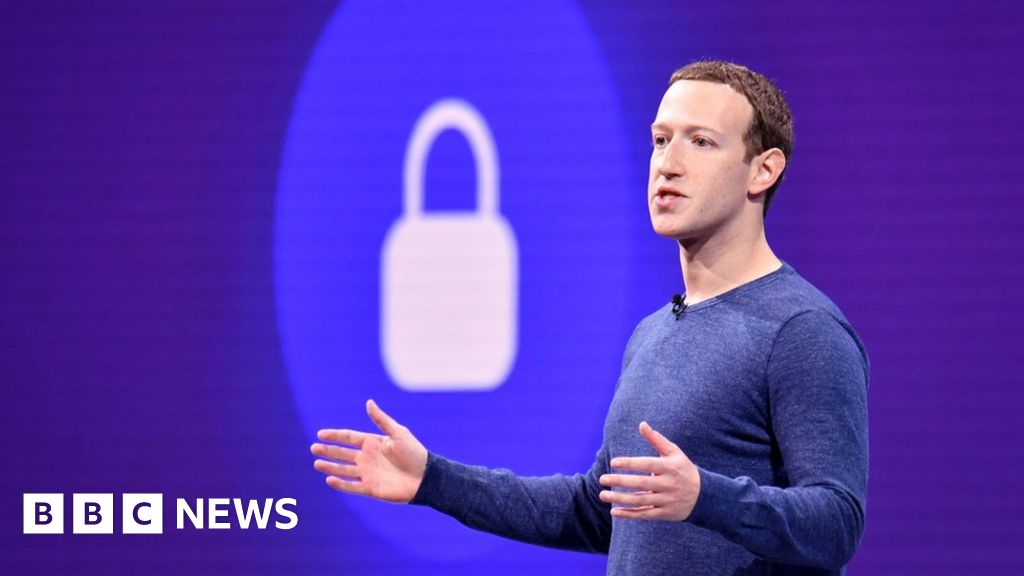
Mark Zuckerberg asks governments to help control internet content - BBC News

Mark Zuckerberg says regulators and governments should play a more active role in controlling internet content.

In an op-ed published in the Washington Post, Facebook's chief says the responsibility for monitoring harmful content is too great for firms alone.

He calls for new laws in four areas: "Harmful content, election integrity, privacy and data portability."

It comes two weeks after a gunman used the site to livestream his attack on a mosque in Christchurch, New Zealand.

"Lawmakers often tell me we have too much power over speech, and frankly I agree," Mr Zuckerberg writes, adding that Facebook was "creating an independent body so people can appeal our decisions" about what is posted and what is taken down.

He also describes a new set of rules he would like to see enforced on tech companies.

These new regulations should be the same for all websites, he says, so that it's easier to stop "harmful content" from spreading quickly across platforms.

What does Mark Zuckerberg want?

In brief, Mr Zuckerberg calls for the following things:

  • Common rules that all social media sites need to adhere to, enforced by third-party bodies, to control the spread of harmful content
  • All major tech companies to release a transparency report every three months, to put it on a par with financial reporting
  • Stronger laws around the world to protect the integrity of elections, with common standards for all websites to identify political actors
  • Laws that not only apply to candidates and elections, but also other "divisive political issues", and for laws to apply outside of official campaign periods
  • New industry-wide standards to control how political campaigns use data to target voters online
  • More countries to adopt privacy laws like the European Union's General Data Protection Regulation (GDPR), which came into force last year
  • A "common global framework" that means these laws are all standardised globally, rather than being substantially different from country to country
  • Clear rules about who's responsible for protecting people's data when they move it from one service to another

The open letter, which will also be published in some European newspapers, comes as the social network faces questions over its role in the Cambridge Analytica scandal around data misuse during election campaigns.

The site has also been criticised for failing to stop the spread of footage of the Christchurch killings, in which 50 Muslims died as they prayed.

The video was livestreamed to the attacker's Facebook page on 15 March, before being copied 1.5 million times.

Mr Zuckerberg's letter did not specifically name these incidents.

However, the site earlier announced that it was considering introducing restrictions on live-streaming in the wake of the Christchurch attacks. On Thursday, it also said that it would ban white nationalism and separatism from the site.

On Friday it also started labelling political ads appearing on Facebook in EU countries, showing who the advertiser is, how much they paid and who they've targeted.

"I believe Facebook has a responsibility to help address these issues, and I'm looking forward to discussing them with lawmakers around the world," Mr Zuckerberg says.

Let's block ads! (Why?)


https://www.bbc.com/news/world-us-canada-47762091

2019-03-31 01:56:24Z
52780254735704

Saudis accessed Amazon CEO Jeff Bezos' phone and gained private data, security chief says - CNBC

Saudi Arabia accessed Jeff Bezos' phone and obtained private data belonging to the Amazon CEO, security specialist Gavin de Becker said in an article posted on The Daily Beast Saturday.

Bezos had tasked de Becker with investigating how The National Enquirer had obtained and published intimate texts that the Amazon CEO had sent to his mistress, TV anchor Lauren Sanchez.

In a shocking post in February, Bezos alleged that National Enquirer publisher AMI blackmailed him by threatening to publish intimate photos if he did not publicly state that the tabloid's coverage of him was not politically motivated. AMI has maintained that it acted lawfully in its reporting on Bezos.

De Becker said his investigation had concluded "with high confidence that the Saudis had access to Bezos' phone and gained private information."

Bezos is also the owner of The Washington Post, which has run critical coverage of the Trump administration and the Saudi government. In October, Post journalist Jamal Khashoggi was murdered in a Saudi consulate in Istanbul, sparking international outrage against Riyadh.

"Some Americans will be surprised to learn that the Saudi government has been very intent on harming Jeff Bezos since last October, when the Post began its relentless coverage of Khashoggi's murder," de Becker said.

De Becker went on to say that it is unclear if AMI was aware of the details, but pointed to what he called a close relationship between AMI chairman David Pecker and the Saudi government.

Saudi has previously denied having anything to do with the National Enquirer's coverage of Bezos.

"This is something between the two parties, we have nothing to do with it," Adel al-Jubeir, Saudi Arabia's minister of state for foreign affairs, told CBS' "Face the Nation" in February.

De Becker said the results of his investigation have been turned over to federal officials.

The Saudi embassy and AMI could not be immediately reached for comment.

Read the full article in The Daily Beast

Let's block ads! (Why?)


https://www.cnbc.com/2019/03/30/saudis-accessed-amazon-ceo-bezos-phone-and-private-data.html

2019-03-31 01:03:35Z
52780255188841

Facebook's Mark Zuckerberg calls for more regulation of the internet - CNN

Zuckerberg called for stricter regulation of "harmful content, election integrity, privacy and data portability" in an op-ed published Saturday on his official Facebook account and in the Washington Post.
Facebook bans white nationalism two weeks after New Zealand attack
"I believe we need a more active role for governments and regulators," he wrote. "By updating the rules for the Internet, we can preserve what's best about it - the freedom for people to express themselves and for entrepreneurs to build new things - while also protecting society from broader harms."
Zuckerberg's missive was the most comprehensive the Facebook CEO has ever been on the issue of government regulation. His call comes as US federal prosecutors are reportedly probing Facebook's data sharing deals with a number of large technology companies. The US Federal Trade Commission is said to be in talks with Facebook over a possible record fine. And European officials continue to scrutinize the company.
Facebook was roundly condemned this month when it failed to stop a live stream by the suspect in the New Zealand terrorist attack that killed 50 people. The platform has also faced a litany of scandals, ranging from hate speech to privacy, and criticism over the spread of fake news, especially during national elections.
"Every day, we make decisions about what speech is harmful, what constitutes political advertising, and how to prevent sophisticated cyberattacks. These are important for keeping our community safe," he wrote. "But if we were starting from scratch, we wouldn't ask companies to make these judgments alone."
HUD charges Facebook with housing discrimination in ads
Zuckerberg called for regulators to hold internet companies "accountable for enforcing standards on harmful content," an idea that has served as a point of contention in the United States and other countries where social media platforms have long been immune from such legal punishments.
He also mentioned Facebook's efforts to patrol political content, much of which was done after the platform was linked with the spread of misleading information ahead of the 2016 US presidential election.
"Our systems would be more effective if regulation created common standards for verifying political actors," he said.
Zuckerberg also called for a "global framework" for data privacy regulations modeled on the European Union's General Data Protection Regulation. That law, which went into affect in May last year, threatens fines for internet companies that improperly share data about their users.
His support of that regulation comes one year after details emerged about Cambridge Analytica, the now-shuttered company that was accused of trying to influence American voters using information gleaned from 50 million Facebook users.
The CEO said data portability — which he described as the ability for users to move their data between social media platforms and other services — should be guaranteed.
"True data portability should look more like the way people use our platform to sign into an app than the existing ways you can download an archive of your information," he said. "But this requires clear rules about who's responsible for protecting information when it moves between services."
It was the second op-are from a Facebook executive this weekend. Sheryl Sandberg wrote in the New Zealand Herald that the company had to get better at policing its platform.
Sandberg said the company was considering restricting who can stream live video on its platform after the suspect in the New Zealand attack broadcast the massacre live on Facebook.

Let's block ads! (Why?)


https://www.cnn.com/2019/03/30/tech/facebook-mark-zuckerberg-regulation/index.html

2019-03-30 21:48:54Z
52780254735704